A routine does not mean a rigid, military‑style schedule. It simply means a predictable pattern of daily activities — waking up, eating meals, studying, playing, and sleeping at roughly the same times each day. When children follow a healthy routine, they feel secure, develop discipline, and gradually learn to manage their time and responsibilities. For parents, creating a simple structure becomes one of the most powerful ways to support a child's physical, emotional, and academic growth.
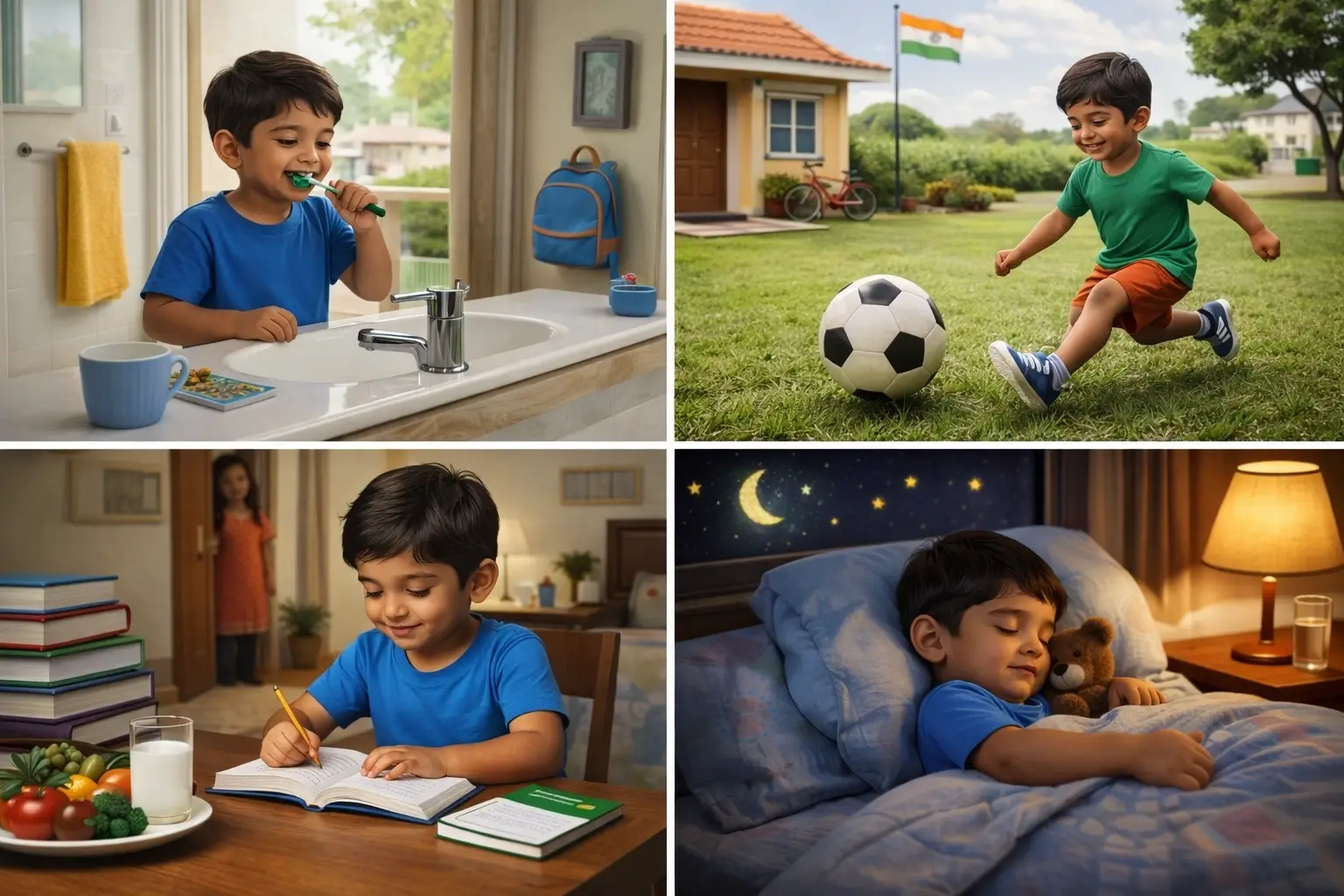
How Daily Routines Give Children Security and Emotional Stability
Children thrive when they know what to expect next. A predictable daily routine tells them when it is time to wake up, eat, go to school, play, and sleep — and what comes next in the morning, afternoon, and evening.
This sense of order reduces confusion and anxiety. When children know what will happen next, they are less likely to feel overwhelmed or stressed. This feeling of emotional safety is especially important for young children who are still learning how the world works.
Routines Help Children Build Discipline and Time Management
One of the biggest benefits of daily routine for children is that it gradually teaches self‑discipline. When kids follow regular schedules for homework, playtime, meals, and bedtime, they learn that:
- Some tasks must be done at a particular time.
- Responsibilities cannot always be postponed.
- Time needs to be shared between study, play, and rest.
Instead of parents nagging constantly, the routine itself becomes the teacher. A child who builds the habit of completing homework every evening at a set time will find it much easier to manage schoolwork in higher classes and competitive exams later.

Healthy Routines Support Physical Development and Sleep
A proper daily routine for kids is crucial for physical health. Regular sleep, fixed meal timings, and daily movement help the body work smoothly. Children who follow irregular routines often face sleep problems, fatigue, and poor concentration.
The American Academy of Sleep Medicine (AASM) recommends the following sleep durations for children to promote optimal health:
| Age Group | Recommended Sleep | Includes |
|---|---|---|
| 3–5 years | 10–13 hours | Including naps |
| 6–12 years | 9–12 hours | Uninterrupted nighttime sleep |
Source: American Academy of Sleep Medicine (AASM)
A fixed bedtime routine — light play, brushing teeth, a short story, dim lights — helps the body and brain wind down naturally. Regular meal timings are equally important: eating at consistent times supports digestion, reduces junk snacking, and builds healthy eating habits for life.
Routine, Focus, and Better Academic Performance
Children who follow a structured routine at home often show better focus and academic performance. When there is a fixed time for homework and study, children develop stronger concentration, reduce procrastination, and are less likely to be distracted by TV or mobile phones.
Routines Encourage Independence and Confidence
A predictable routine also helps children become more independent. When tasks follow the same order every day, children start doing many things on their own:
As children handle these small responsibilities without constant reminders, they develop a sense of achievement and confidence. They begin to believe: "I can do things by myself." This independence is an important foundation for managing school projects, college schedules, and professional responsibilities later in life.

How a Routine Reduces Stress for Parents and Families
A proper routine is not just good for kids — it is a powerful stress‑reducer for parents too. When a family follows a regular schedule, mornings become less chaotic, bedtime struggles reduce, and parents spend less time repeating the same instructions.
When the Family Follows a Routine:
- Mornings are less chaotic and more calm.
- Fewer arguments about brushing, eating, or bedtime.
- Parents spend less time repeating instructions.
- Less daily negotiation over homework and screen time.
- A calmer, more organised home environment for everyone.
Routines Help Balance Study, Play, Rest — and Screen Time
One of the biggest challenges for modern parents is balancing academics, play, sleep, and screen time. A well‑planned routine ensures that children get time for all aspects of development:
Screen Time — What Experts Recommend
The American Academy of Pediatrics (AAP) recommends no more than 1 hour per day of high-quality content for children aged 2–5 years. The WHO echoes this recommendation, as does the Indian Academy of Pediatrics, which recommends a maximum of 1 hour supervised screen time per day for children aged 2–5 years.
Playtime is especially important — it builds social skills, creativity, problem‑solving, and emotional resilience. A balanced routine protects play time instead of letting it be replaced completely by screens or extra tuition.
Tips for Parents to Create a Healthy Daily Routine for Children
Parents do not need a perfect schedule — just a simple, realistic routine for kids that can be followed most days.
Keep It Simple & Age-Appropriate
Do not overload the day with too many classes or activities. Children need breathing space and unstructured time too.
Involve Your Child in Planning
When children help decide ("Homework first or play first?"), they feel ownership over the routine and cooperate more willingly.
Stay Consistent with Key Timings
Try to keep sleep, wake‑up, and main meal times steady, even on weekends. Consistency is what makes a routine truly effective.
Allow Some Flexibility
Occasional changes for festivals, travel, or special events are completely normal. Routines should support happiness, not create pressure.
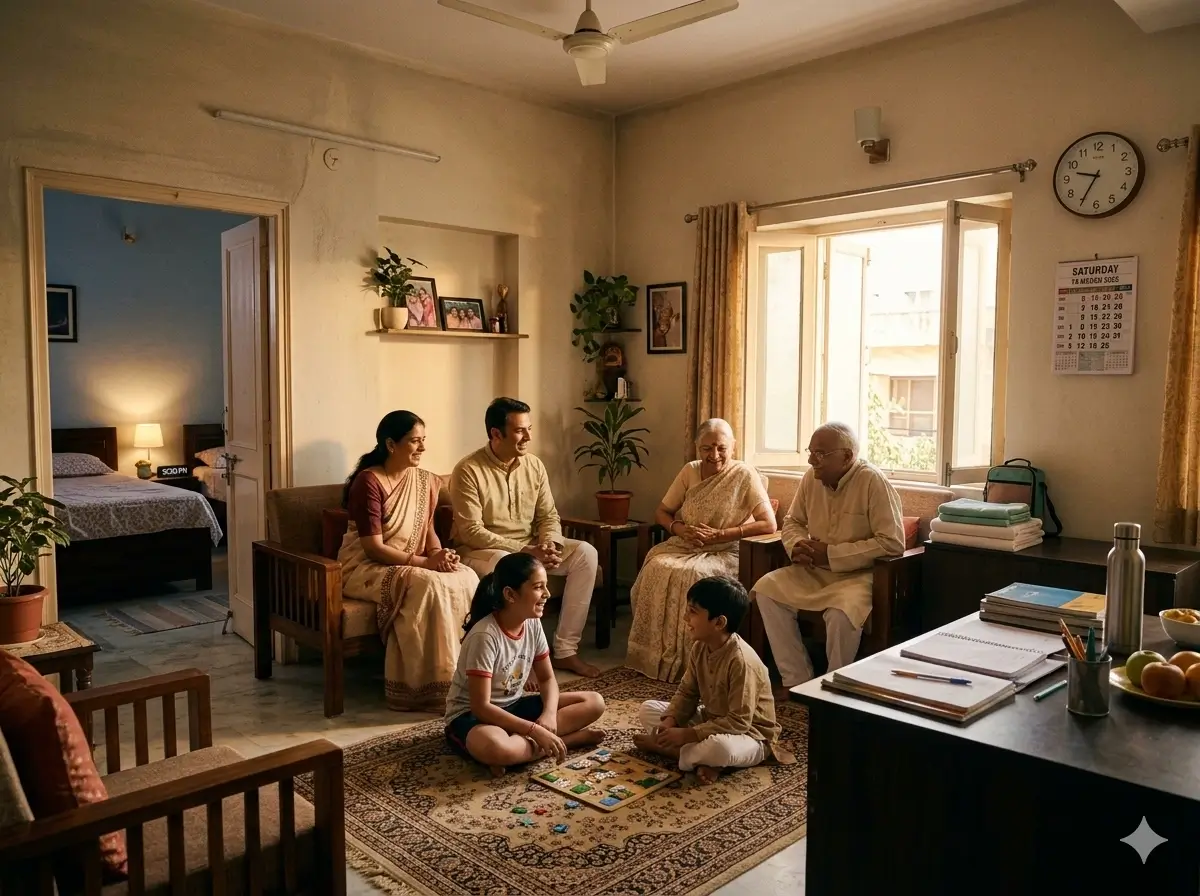
Key Points to Remember About Children's Routines
Security & stability: A predictable daily routine gives children emotional security and reduces anxiety.
Builds discipline: Routines gradually teach self‑control and time‑management — skills children carry for life.
Sleep matters: Ages 3–5 need 10–13 hrs; ages 6–12 need 9–12 hrs. A fixed bedtime makes this easier.
Better academics: 170+ studies confirm routines are linked with better cognitive skills, focus, and school performance.
Encourages independence: Children who follow routines start managing daily tasks confidently on their own.
Screen time limits: Max 1 hr/day for ages 2–5. A routine protects play, sleep & family time.
Reduces parent stress: Regular schedules mean fewer arguments, calmer mornings, and a more organised home.
Involve your child: Children who help plan their routine follow it more willingly and feel more responsible.
Routine: A Foundation for Lifelong Healthy Habits
Childhood routines may look like small daily actions, but together they build lifelong habits. Children who grow up with structured routines at home often develop stronger self‑discipline, healthier lifestyles, and better time‑management and planning skills — qualities that support them through school, higher education, and eventually professional life.
A Simple Routine Is a Powerful Gift
A proper routine is not about controlling every minute of a child's day. It is about offering a stable, loving framework that helps children feel secure, learn responsibility, and grow into confident, capable individuals. By establishing healthy routines early, parents give their children a quiet but powerful gift that will benefit them for many years to come.
More Parenting Guides on SabKiShiksha →