While parents feel a mixture of excitement, nervousness, and relief, many young children experience something very different: separation anxiety in nursery kids, especially at school drop‑off in Delhi private schools. It is very common to see little children clinging to parents, crying at the school gate, or refusing to enter the nursery classroom during the first few days.
This phase can be emotionally difficult for both parents and children. However, experts say that separation anxiety in 3–4‑year‑old nursery children is completely normal, especially for kids stepping into school life for the first time. With the right preparation, emotional connection, and a little patience, this phase can transform from tears at the gate to confident waves and happy goodbye kisses. 💛

Why Separation Anxiety Happens in Delhi Nursery Kids
Most nursery children in Delhi grow up surrounded by parents, grandparents, siblings, or caregivers at home. For many, nursery admission in a Delhi private school is the first time they:
- Spend several hours away from their primary caregivers
- Follow a fixed routine outside the home environment
- Enter a big, structured classroom with strangers
This sudden change can feel overwhelming. Children at this age have not yet fully understood that when parents leave, they will definitely come back. So when they see parents walking away from the school gate or classroom door, they may feel:
Scared
Confused
Abandoned
Unsure
Signs of Separation Anxiety in Nursery and KG Children
Every child reacts differently during the first‑week nursery drop‑off in Delhi, but common signs of separation anxiety in preschoolers include:

Preparing Your Child Before Nursery School Begins
Parents can reduce Delhi nursery separation anxiety significantly by preparing children in advance.
Talk About School Positively, Weeks in Advance
Describe exciting things your child will experience — new friends, colourful classrooms, toys, story time, rhymes, drawing, and play activities. Make school sound like an adventure, not an obligation.
Visit the School Building Before Day One
Even seeing the school gate, playground, or school bus can make the environment feel more familiar for a Delhi nursery kid. A familiar place feels less scary.
Read Picture Books About "First Day at School"
Many children understand emotions more easily when they see characters in stories going through the same experience. Books reduce the fear of the unknown.
Let Your Child Ask All Their Questions
"Will you come back?" "Who will be there?" "What will I do?" — answer every question calmly and honestly so your child feels safe and emotionally connected.
Practice Short Separations Before the First Nursery Day
If your child is rarely away from you, practise small separations before the official start of Delhi nursery admission 2026–27:
- Leave the child with a trusted grandparent, relative, or friend for short periods
- Gradually increase the duration as your child becomes more comfortable
The One Lesson That Changes Everything
"Mumma or Papa goes away… but always comes back."
This simple experience is one of the most powerful home‑based tips for Delhi parents to reduce crying at the school gate on the first day.
Create a Predictable, Calm Morning Routine
Children feel more secure when they know what to expect. A calm, predictable school‑day morning routine can reduce separation anxiety significantly.
- Wake up early enough so your child is not rushed or stressed
- Allow time for breakfast, brushing, dressing, and a few minutes of cuddles
- Avoid shouting, scolding, or last‑minute panic — children strongly sense their parents' stress
Many Delhi parents create a small, loving goodbye ritual before leaving for nursery:
Keep Goodbyes Short, Warm, and Confident
One of the most common mistakes at Delhi nursery drop‑off is stretching out the goodbye. When children cry, parents feel guilty and stay longer — but this usually makes separation harder.
What Teachers Recommend Every Time
- A quick, warm, loving goodbye
- A clear promise: "I will come back to pick you up."
- Then leave confidently — without repeatedly turning back
Many children stop crying within a few minutes once parents leave and they get busy with toys, group activities, and play. If you search "how to stop my child crying at school gate in Delhi", almost every expert agrees: short, confident goodbyes work better than long emotional ones.

Build Trust with the Nursery Teacher
Teachers in Delhi private nursery classes are trained to handle crying, clinging, and first‑day fears. They comfort children, distract them with play, and slowly build a bond of trust.
Parents can support this by:
- Talking openly with the teacher and sharing what calms the child
- Showing your child that you like and trust the teacher
- Avoiding repeated check‑ins during school hours — it delays adjustment
The message your child needs to receive:
"Teacher is also my safe grown‑up." ❤️
Celebrate Small Progress — Not Just Perfect Days
Adjustment does not happen overnight. Some children settle in 2–3 days; others may need a few weeks. Instead of expecting a perfect, tear‑free day immediately, look for small signs of progress:
What Parents Should Avoid While Handling Separation Anxiety
When the child realises you disappeared without a goodbye, it can deeply break trust and worsen anxiety the next day.
If parents look very upset at drop‑off, the child may assume school is a dangerous or scary place.
Never say "If you don't behave, I'll send you to school." This creates a deeply negative image of school in the child's mind.
Always Present School As:
- A safe place where teachers care
- A fun place full of play and learning
- A place where new friends are waiting
When to Seek Extra Help
In most cases, separation anxiety in nursery kids gradually fades within a few weeks of regular school attendance. However, parents may consider discussing the situation with the class teacher, school counsellor, or a child psychologist if they notice:
Signs That May Need Professional Support
- Very intense panic that continues for a long time without improvement
- Complete refusal to attend school for many days or weeks
- Strong physical symptoms — vomiting or severe stomach pain — clearly linked to school fear
Early support can help children build healthy coping skills and prevent long‑term school anxiety.
Key Points for Delhi Parents to Remember
- Separation anxiety is normal for 3–4‑year‑old nursery kids — it is not a red flag
- Prepare your child in advance — talk positively, visit the school, read books
- Practise short separations before the first day so the child trusts you'll return
- Calm morning routine and a goodbye ritual reduce anxiety daily
- Short, confident goodbyes work better than long emotional ones
- Build trust with the teacher — the child needs two safe adults, not one
- Celebrate every small step — 5 minutes less crying is a win
- Never sneak away, threaten school, or show excessive panic
- Seek help if anxiety persists for weeks with intense physical symptoms
- Remember: every child adjusts at their own pace — and they will get there
Turning Tears into Confidence: A Delhi Parent's Journey
The transition from home to nursery school is one of the most important milestones in a child's early life. The first few days may bring tears, clinging, and emotional goodbyes at the school gate — but they also mark the beginning of new friendships, new skills, and growing independence.
With patience, empathy, daily routines, and consistent reassurance, Delhi parents can help their children move:
Crying at the gate — scared, clinging, refusing to go in
Hesitant but walking in — still unsure, but trusting a little
Waving confidently — comfortable, beginning to enjoy school
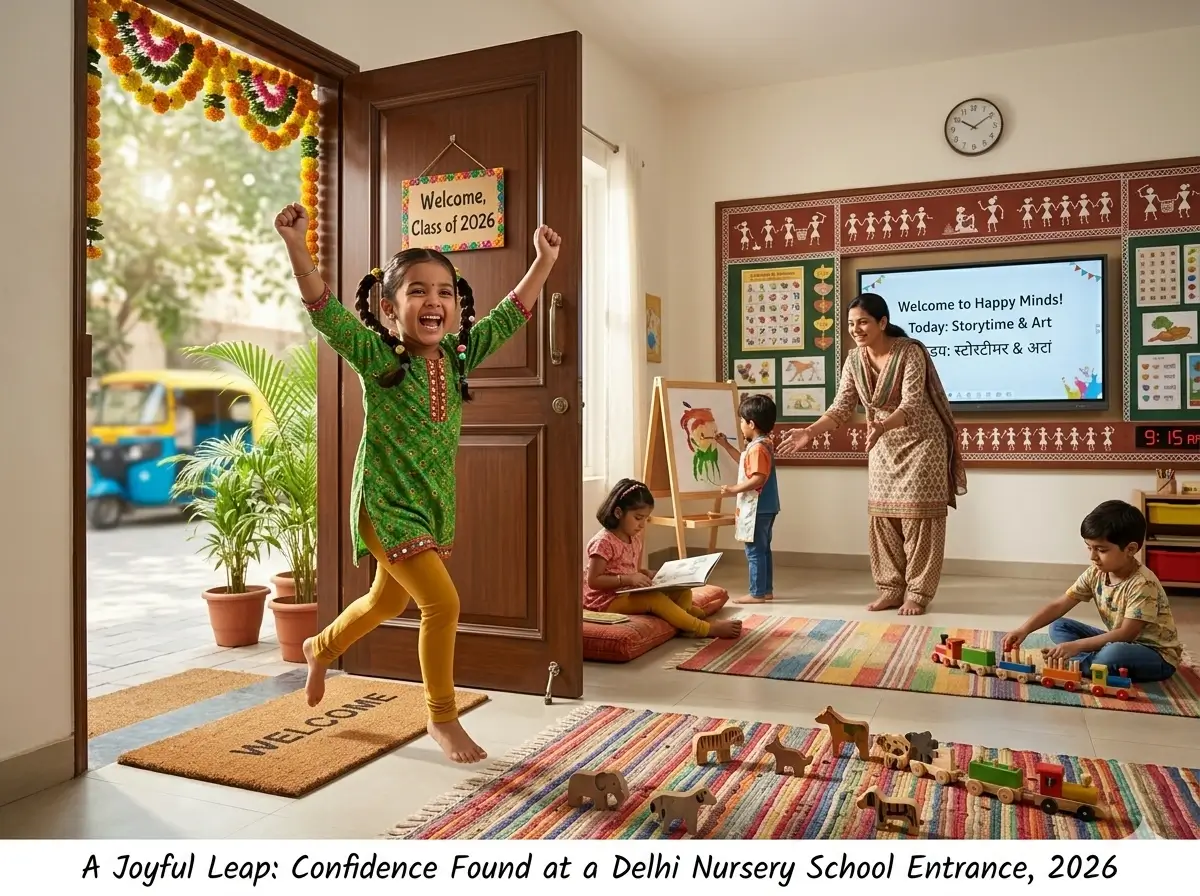
Running inside excitedly — eager to meet friends and share stories about the day
Those tough mornings were just the first steps of a beautiful journey.
When your child runs into class one day — backpack bouncing, waving you goodbye — you'll know those emotional mornings at the school gate were simply the beginning of their world expanding with joy, learning, and confidence.
More Parenting Guides on SabKiShiksha →