Today, thousands of teachers across India are physically exhausted, emotionally drained, and professionally overburdened. Beyond teaching, they are expected to manage administrative work, complete endless documentation, handle parent expectations, prepare students for examinations, participate in government duties, maintain discipline, conduct online updates, and often act as counselors, event managers, and social workers—all at the same time.
The growing burden on teachers is not merely an educational issue; it is a social concern. When teachers are overwhelmed, the quality of education suffers, classrooms become stressful, and students ultimately pay the price. The question is no longer whether teachers in India are overburdened. The real question is: why has teaching become one of the most exhausting professions despite being one of the most important?
Teaching Is No Longer Limited to Teaching
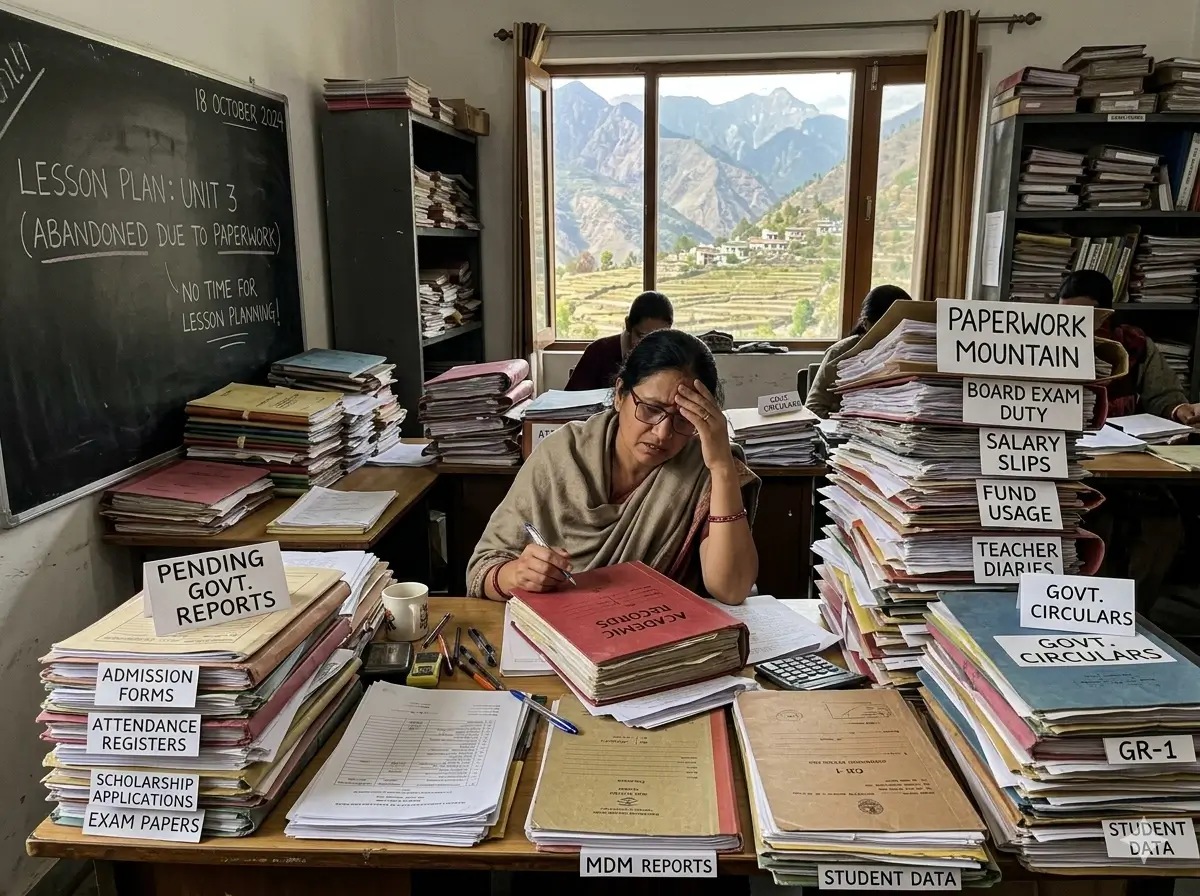
Traditionally, a teacher’s primary responsibility was classroom instruction—teaching lessons, explaining concepts, and guiding students. However, in many Indian schools today, actual teaching has become just one part of the job.
Teachers are often buried under paperwork, reports, digital entries, attendance records, exam documentation, result analysis, meeting schedules, and school event responsibilities. Government school teachers are additionally assigned duties related to surveys, election work, census activities, vaccination campaigns, and other administrative programs.
Overcrowded Classrooms Increase Pressure
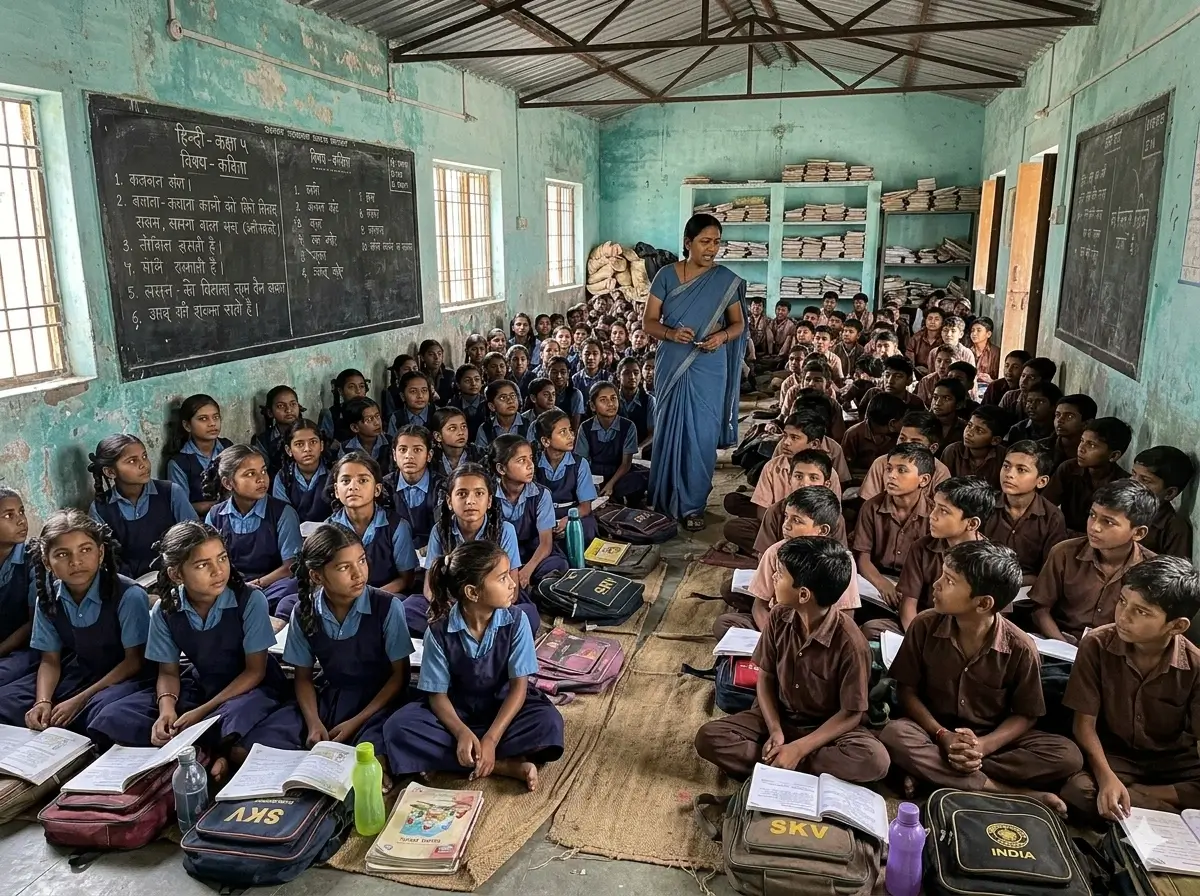
One major reason behind teacher stress in India is the large student-teacher ratio. In many schools, especially government institutions, one teacher may handle 40 to 70 students in a single classroom. Managing such a large group is emotionally and physically demanding.
Discipline
Maintaining order among 50+ students while trying to teach effectively.
Learning Gaps
Addressing individual differences and ensuring every child understands the lesson.
Evaluation
Checking notebooks, assignments, and preparing students for examinations.
Doing all this effectively for dozens of students every day becomes extremely difficult. Children learn at different speeds. Some require extra attention, emotional support, or repeated explanations. But when classrooms are overcrowded, teachers often struggle to provide individualized learning support. This not only increases pressure on teachers but also affects the confidence and performance of students.
The Pressure of Board Results and Rankings
In India, academic success is often measured through marks and examination results. Schools compete for rankings, parents expect high scores, and teachers are held responsible for student performance. As a result, teachers experience constant pressure to produce excellent board examination results.
In many schools, teachers are evaluated not by how well students understand concepts, but by how many students score above 90 percent. This creates an unhealthy environment where teaching becomes exam-oriented, creativity gets ignored, students are pushed excessively, and teachers work under fear of poor results.
Many teachers conduct extra classes, late-evening revisions, holiday sessions, and continuous test preparation to meet institutional expectations. The emotional burden becomes even heavier when teachers are blamed for students’ poor academic performance despite multiple external factors affecting learning.
Rising Parent Expectations
Parents today are more involved in their children’s education than ever before. While parental involvement is important, unrealistic expectations often create additional pressure on teachers. Many parents expect teachers to ensure excellent academic results, correct behavioral issues, build confidence, improve communication skills, manage emotional well-being, and prepare children for competitions and future careers.
In some cases, teachers are held accountable for almost every challenge a child faces. Frequent complaints, constant comparisons, social media criticism, and pressure from parent groups can make teachers feel undervalued and emotionally exhausted. Instead of being treated as partners in a child’s growth, teachers are sometimes treated like service providers who are expected to deliver perfect outcomes.
The Digital Burden After the Pandemic
The COVID-19 pandemic changed the educational landscape dramatically. Teachers had to quickly adapt to online teaching, digital platforms, virtual classrooms, recorded lectures, and technology-based learning systems. Even after schools reopened, digital responsibilities remained.
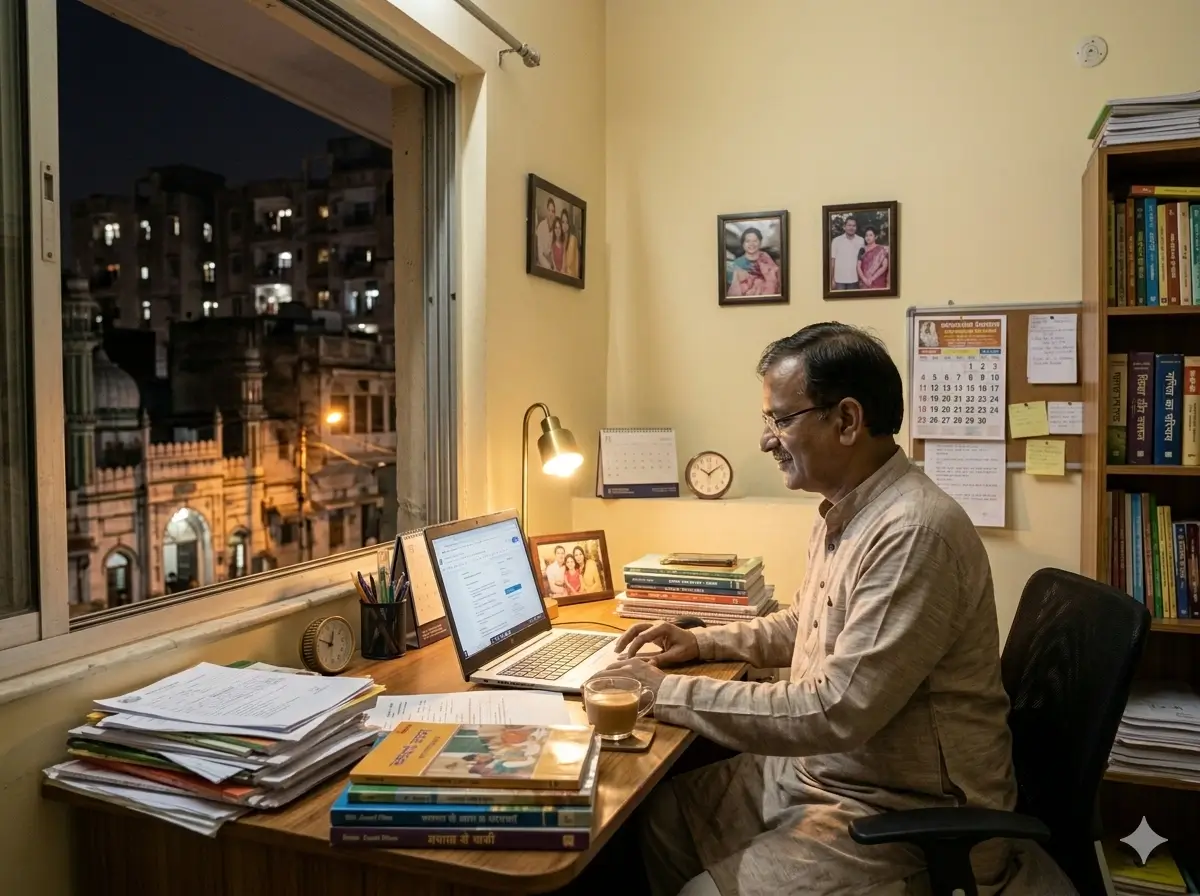
The "Always Available" CultureUploading homework online, maintaining digital attendance, and sharing updates on apps often blur the boundaries between professional and personal life.
Digital FatigueResponding to parent messages and conducting online assessments late into the evening has become mentally exhausting, especially for those unfamiliar with advanced tech.
Emotional Labor: The Most Ignored Burden
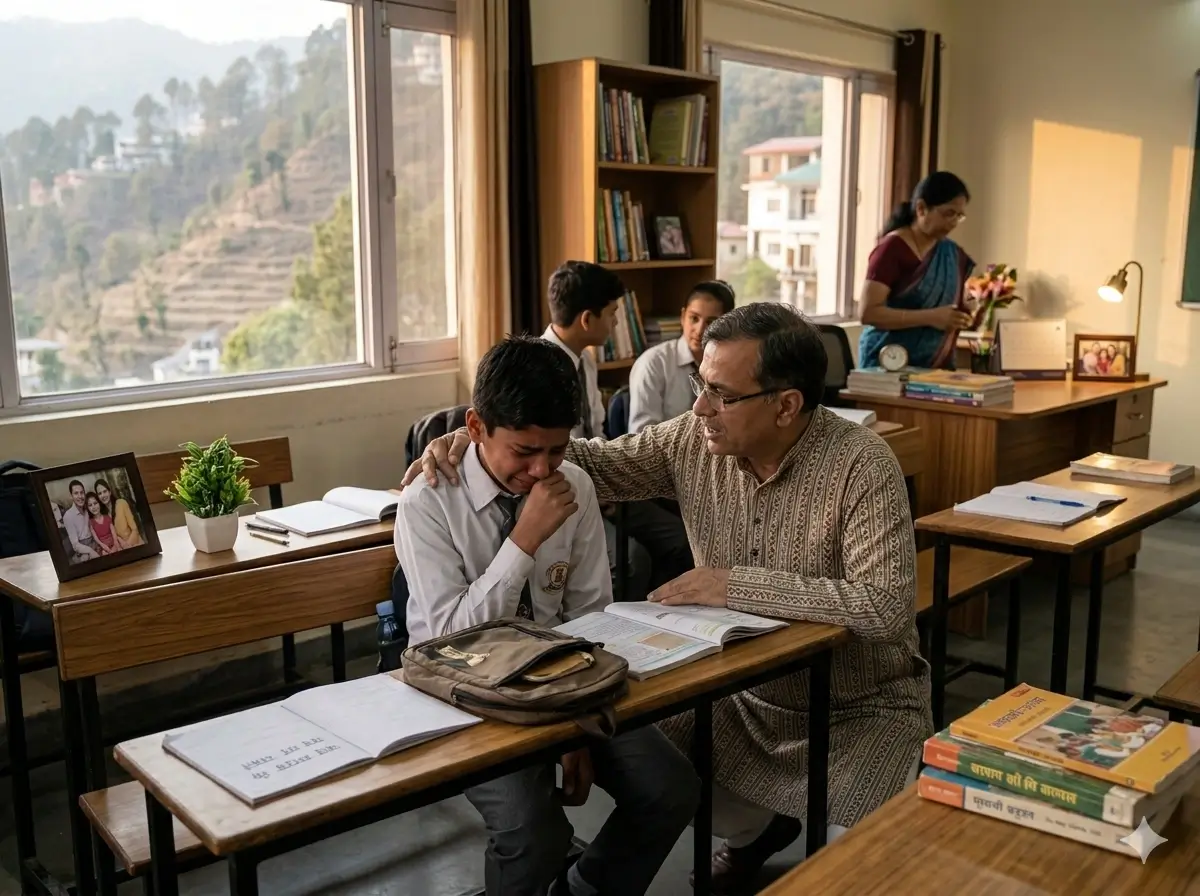
Teaching is not only an academic profession; it is deeply emotional. Teachers deal with children who may be anxious, lonely, distracted, emotionally disturbed, or struggling at home. Many students seek emotional comfort from teachers because they trust them.
A teacher often becomes a mentor, a counselor, a motivator, a listener, and a protector. Yet, emotional labor is rarely acknowledged. Teachers are expected to remain calm, patient, positive, and emotionally available even when they themselves are stressed or mentally exhausted.
Lack of Respect and Recognition
Despite being one of the most important professions in society, many teachers feel underappreciated. There was a time when teachers were deeply respected figures in communities. Today, increasing commercialization of education, customer-like attitudes in schools, and public criticism have affected the dignity associated with the profession.
Social media has also intensified scrutiny. A small classroom mistake can quickly become public controversy. Low salaries in many private schools further worsen the situation. Some teachers work long hours with limited financial security and minimal professional growth opportunities. When effort is not matched by recognition or support, burnout becomes inevitable.
Impact on Students
An overburdened teacher cannot teach with full energy, creativity, or emotional presence. When teachers are constantly stressed, classroom engagement reduces, patience decreases, innovation declines, and the emotional connection weakens. Students may receive information, but meaningful learning suffers.
Children learn best when teachers are emotionally healthy, motivated, and mentally available. A stressed education system eventually creates stressed classrooms. Therefore, supporting teachers is directly connected to improving student outcomes.
What Needs to Change?
Reducing teacher burden in India requires systemic reforms, not temporary solutions.
Reduce Administrative WorkTeachers should spend maximum time teaching, not filling endless forms and records.
Better Student-Teacher RatiosMore teacher recruitment is essential, especially in government schools.
Emotional Support & Respectful PartnershipsSchools should provide mental health support, and parents must work with teachers instead of blaming them.
Recognition Beyond MarksTeachers should be appreciated not only for board results but also for creativity, mentorship, and emotional support.
Nurturing the Nation Builders
Teachers in India are carrying far more responsibilities than society often realizes. They are expected to educate, manage, motivate, discipline, counsel, organize, and constantly perform under pressure. Yet, despite the exhaustion, many teachers continue entering classrooms every morning with dedication and hope.