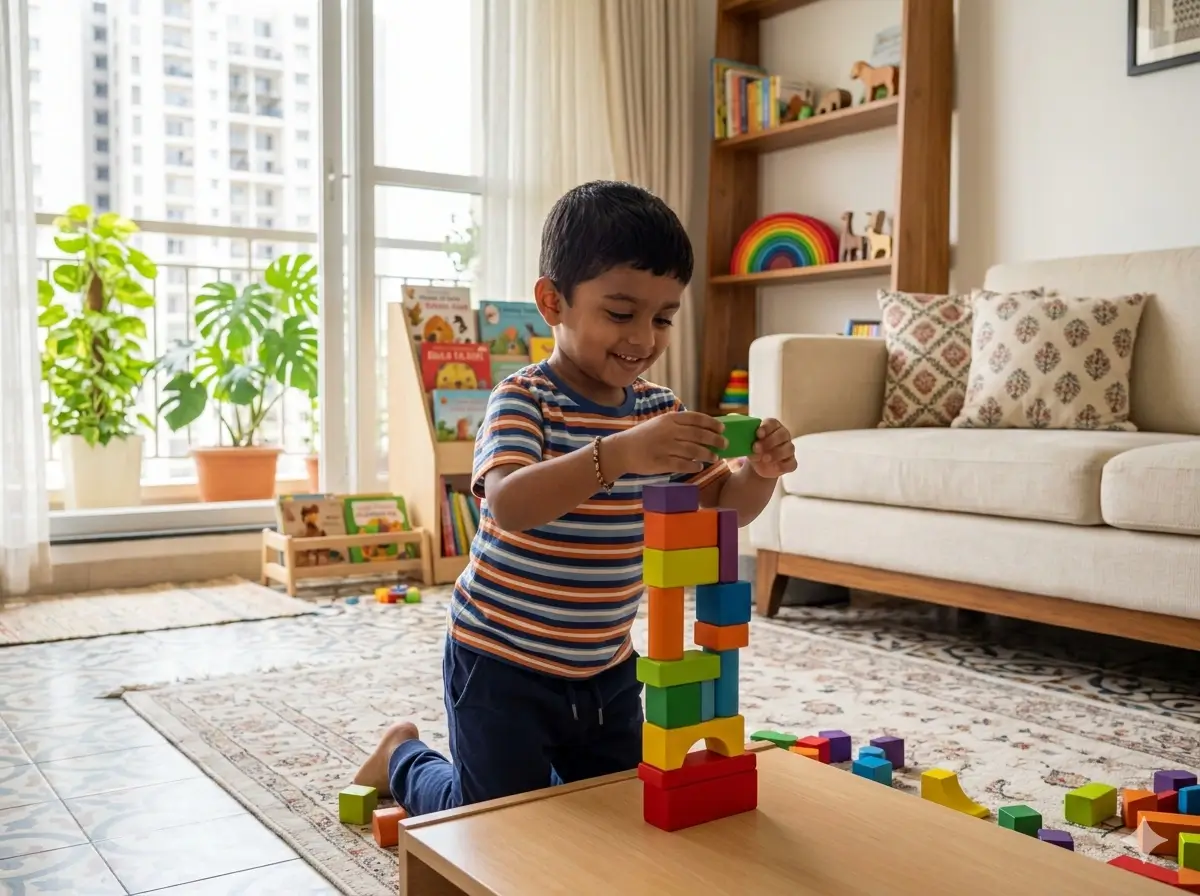
Importance of Mathematics in Early Years: Building Foundations for Lifelong Success

"Without mathematics, there's nothing you can do. Everything around you is mathematics. Everything around you is numbers."
— Shakuntala DeviWhy Early Numeracy Skills Matter for Child Development
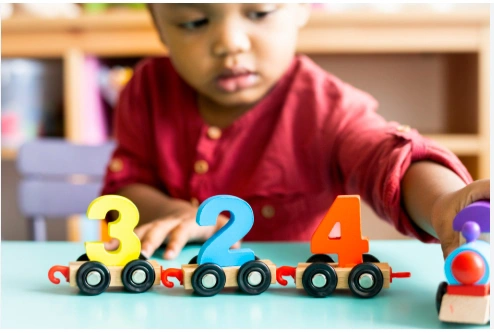
Mathematical learning begins in infancy
Mathematical knowledge begins during infancy and undergoes extensive development over the first 5 years of life. According to research, "humans are born with a fundamental sense of quantity." A child begins their mathematical journey very early—even before knowing numbers, they understand concepts like 'less' and 'more.'
The National Council of Teachers of Mathematics (NCTM) and National Association for the Education of Young Children (NAEYC) emphasize that high-quality, challenging, and accessible mathematics education for 3- to 6-year-old children is a vital foundation for future learning success. Early math skills are actually a stronger predictor of future academic achievement than early reading abilities.
Practical Ways to Introduce Math Concepts to Young Children

Everyday activities provide natural math learning opportunities
Early childhood math education doesn't require formal lessons. Parents can introduce math concepts for preschoolers through simple, everyday conversations:
Everyday Math Questions
- Ask: "Which bowl is bigger?" or "Who is taller—Mom or Dad?"
- Compare: "Which plate has more food portions?"
- Count together: "How many apples are in the basket?"
- Measure: "How much is the glass filled with juice?"
- Problem-solve: "If we add one more chapati to your plate, how many will there be?"
Play-based learning in mathematics is particularly effective. Games like Ludo and Snakes & Ladders help children practice early numeracy skills while having fun. Through games and hands-on activities, children develop confidence in solving mathematical problems independently.
The Importance of Math Concepts Over Memorization
Math concepts for children should focus on understanding rather than memorization. Parents should introduce foundational concepts first:
- More or less: "Do you want more juice?"
- Big or small: "This toy is bigger than that one."
- Wide or narrow: "This road is wider than that path."
Only after grasping these concepts should parents escalate to introducing numbers. This foundation supports early childhood math development and prevents gaps in learning.
Building Problem-Solving and Critical Thinking Skills
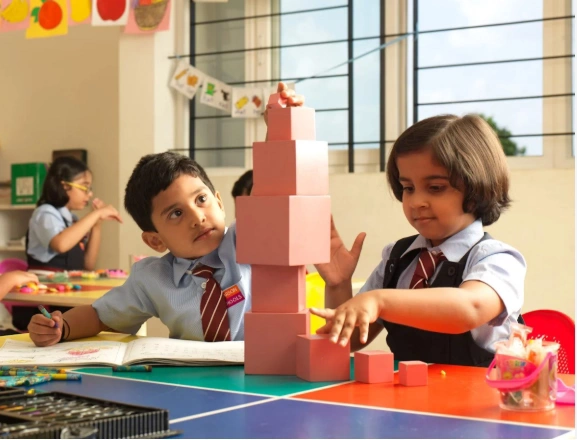
Problem-solving builds critical thinking beyond mathematics
The real value of early mathematics education lies in teaching children to think about problems, which is more important than the solution itself. When children solve math problems independently or learn from mistakes, they develop critical thinking skills that extend far beyond mathematics.
Early numeracy activities involving problem-solving boost:
- Cognitive development
- Logical reasoning
- Creative thinking
- Decision-making abilities
- Self-confidence
New Education Policy 2020: Emphasizing Math Literacy
India's New Education Policy (NEP) 2020 recognizes the importance of mathematical reasoning and mandates that math education should be entertaining and engaging from the very first step. The NEP also emphasizes 21st-century numerical thinking as essential for entrepreneurship and employment.
The policy advocates for a coding curriculum beginning in middle school to foster computational skills and intuitive reasoning—skills built on strong mathematical foundations established in early childhood.
Alarming Statistics: The Math Gap
ASER 2018 Data
According to the 2018 Annual Status of Education Report (ASER), the current state of math literacy in India is concerning:
- Only 43% of grade 8 students can solve grade 5 arithmetic problems
- Merely 28% of grade 5 students can perform basic division operations
This data highlights why early childhood mathematics education is crucial. Starting math early prevents the widening gaps seen in older grades.
Key Benefits of Early Math Learning

Early math learning builds confidence and future success
Research shows that child development through mathematics provides:
- Foundation for Future Success: Strong early math skills predict success in advanced subjects like science and technology
- Cognitive Development: Mathematical thinking strengthens neural pathways for logical reasoning
- Real-World Application: Children learn practical skills for shopping, cooking, and daily decision-making
- Inclusive Learning: Early math exposure helps prevent gender and cultural biases about who can do math
- Self-Confidence: Mastering early concepts builds confidence for tackling complex problems later
How Parents Can Support Early Numeracy Development
Practical tips for early childhood math:
Action Steps for Parents
- Incorporate daily: Include math concepts in everyday routines—cooking, shopping, sorting toys
- Use manipulatives: Physical objects help children grasp abstract concepts
- Play games: Board games naturally incorporate counting and strategy
- Praise effort: Positive reinforcement builds a love for learning
- Be patient: Allow time for each concept to solidify before moving forward
- Make it fun: Keep early childhood mathematics playful and pressure-free
Conclusion: Mathematics Is for Everyone
Early numeracy skills are not innate talents—they're learned through exposure, practice, and encouragement. By introducing math concepts to young children through play-based learning and daily interactions, parents and educators can:
- Build strong mathematical foundations
- Develop problem-solving and critical thinking
- Foster confidence and resilience
- Prepare children for academic and professional success
- Create lifelong learners who view mathematics as accessible and valuable
The importance of mathematics in early years cannot be overstated. Starting now—through simple counting, measuring, and pattern recognition—parents can set their children on a path toward mathematical literacy and success. Remember: early childhood mathematics education is not about memorizing facts; it's about building thinkers who can understand and navigate their world.
About SabKiShiksha
SabKiShiksha provides expert guidance on education, child development, parenting strategies, and teacher professional development. Our mission is to empower parents and educators with practical, research-backed approaches to support children's growth at every developmental stage, including early numeracy and mathematical thinking.
Need guidance on your child's mathematics development? Connect with our educational experts through SabKiShiksha for personalized support.