This statement best captures the reality of raising children in metropolitan cities today. A generation ago, urban motherhood in India revolved around large joint families, familiar neighbourhoods, and well-defined social roles. Mothers leaned on an ecosystem of grandparents, aunts, neighbours, and cousins. Today, life in cities like Delhi, Mumbai, Bengaluru, Hyderabad, Pune, Chennai, and Gurugram tells a very different story with smaller families, limited support systems, demanding work schedules, and digital technology reshaping how children grow up and how mothers parent.
While urban India provides greater educational opportunities, financial independence, and career growth, it introduces heavy modern parenting challenges. Contemporary mothers are expected to excel professionally, remain emotionally available, maintain a household, support ageing parents, and nurture relationships—proving why many describe motherhood as both fulfilling and overwhelmingly demanding.
From Joint Families to Nuclear Households
One of the biggest shifts in modern Indian society is the transition from joint families to nuclear households:
The Past Support SystemGrandparents looked after children while parents worked; aunts and uncles helped supervise homework and meals, sharing emergencies and festivals.
The Modern RealityYoung couples often live far from their parents due to employment. Everyday tasks—school drop-offs, doctor visits, and bedtime routines—fall on one or two adults, creating a constant feeling of being "on duty."
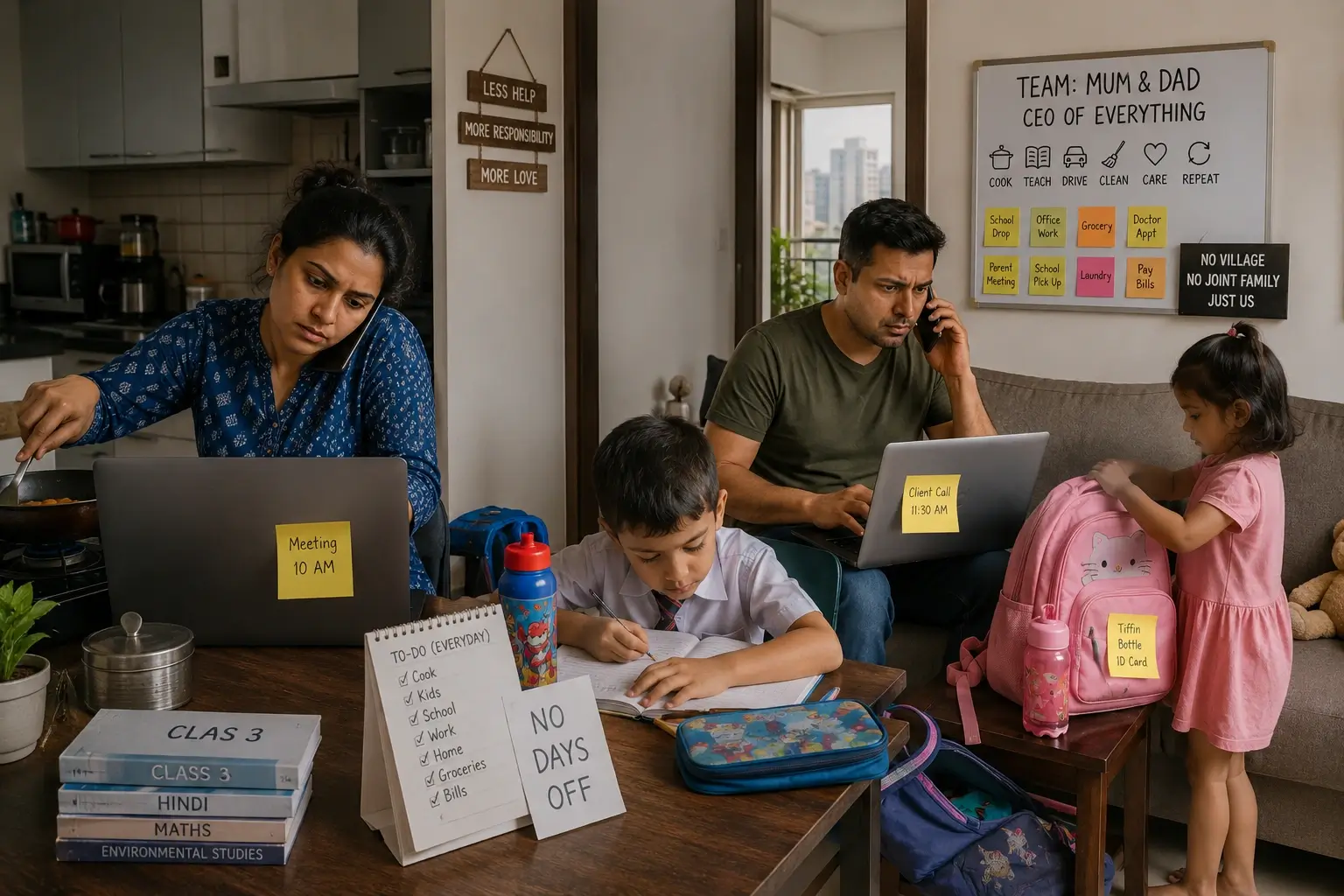
The Rise of the Working Mother & The "Double Shift"
Urbanisation has aligned with a significant increase in women pursuing higher education and entering the workforce as doctors, engineers, entrepreneurs, teachers, and corporate leaders.
Progress & Independence
Financial independence gives women greater confidence, security, and decision-making power in family and society.
The "Double Shift"
Employment has not reduced domestic expectations. Many working women shoulder a disproportionate share of home management alongside full-time jobs.

Parenting in the Age of Information & Social Media Pressure
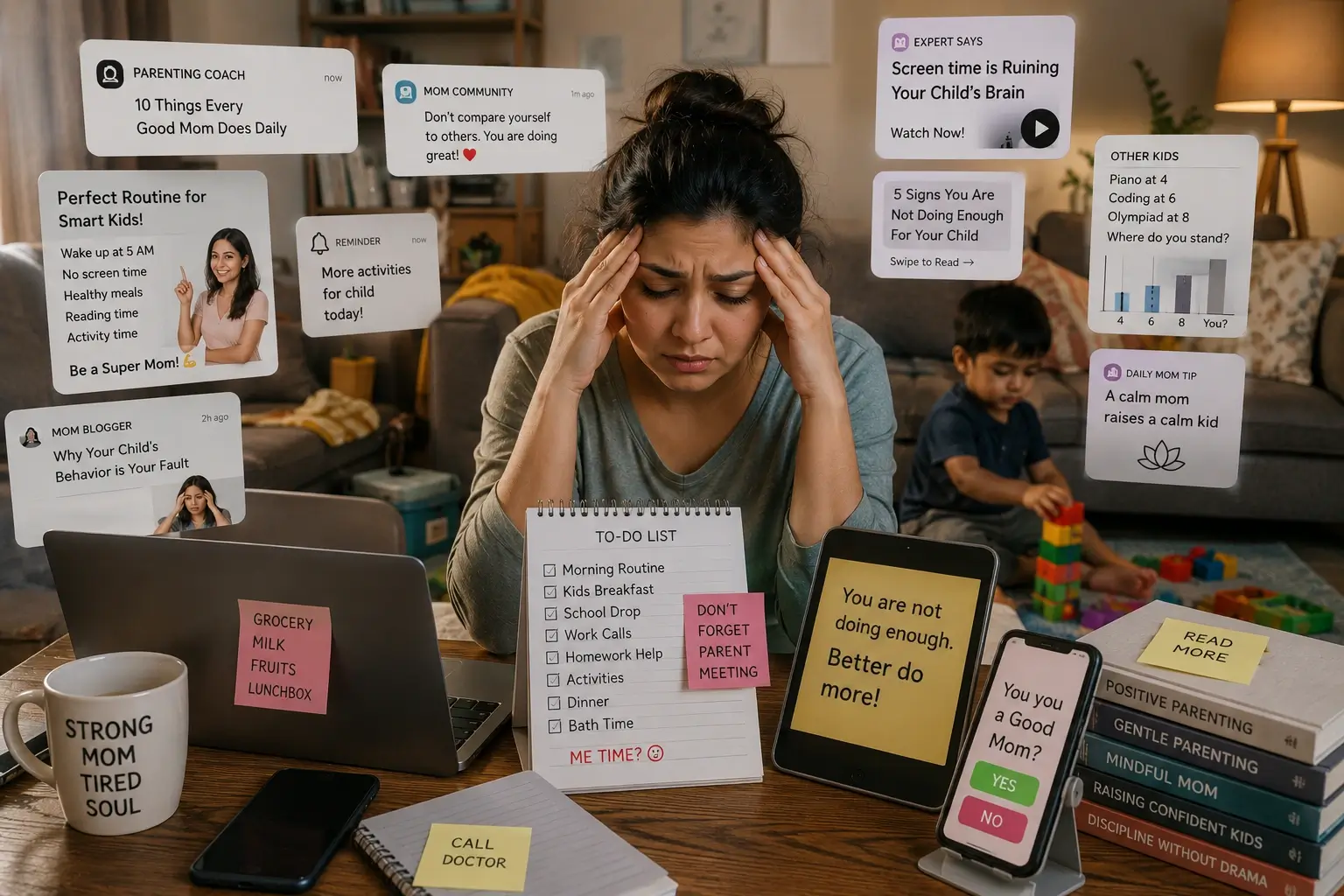
Unlike previous generations, today’s mothers face an endless stream of advice via social media on nutrition, sleep schedules, screen time, and emotional intelligence.
Information Overload: Conflicting expert advice and curated online milestones breed constant comparison and self-doubt.
The "Perfect Mother" Myth: Social media showcases spotless homes, healthy lunch boxes, and creative activities. Real life involves tantrums, messy houses, and late work days, making mothers feel they are falling short.
Safety Concerns and Competitive Education
Safety as a Daily Concern: Modern urban parents worry about traffic, strangers, cyberbullying, digital addiction, substance abuse, and peer pressure. Children play outdoors less, increasing structured and supervised activities.
Competitive Education: The race for school admissions, coaching classes, Olympiads, coding, and extracurricular activities begins early. Mothers often act as planners, chauffeurs, and counsellors, risking family exhaustion.
The Silver Linings: Involved Fathers and Digital Tools
Fathers Becoming More Involved: Across urban households, fathers are increasingly attending parent-teacher meetings, helping with homework, and managing bedtime routines, shifting caregiving toward a shared responsibility.
Technology as Friend and Challenge: While mobile apps, online paediatricians, and location tracking simplify logistics, they spark dilemmas regarding screen time limits, smartphone ages, and digital boundaries.

Maternal Mental Health Deserves Attention
Conversations around maternal mental health are finally opening up. Moving past the expectation to quietly cope with burnout, loneliness, anxiety, and postpartum depression, more women are seeking help.
Building Supportive Ecosystems for Urban Mothers
Urban India brings remarkable opportunities—healthcare, education, financial independence, and gender equality. The goal is to preserve traditional strengths while embracing modern advantages by prioritizing shared responsibilities, reducing comparisons, and building communities.