Role of Parents in Building the Value System Among Students
Why Home is Where Character Begins
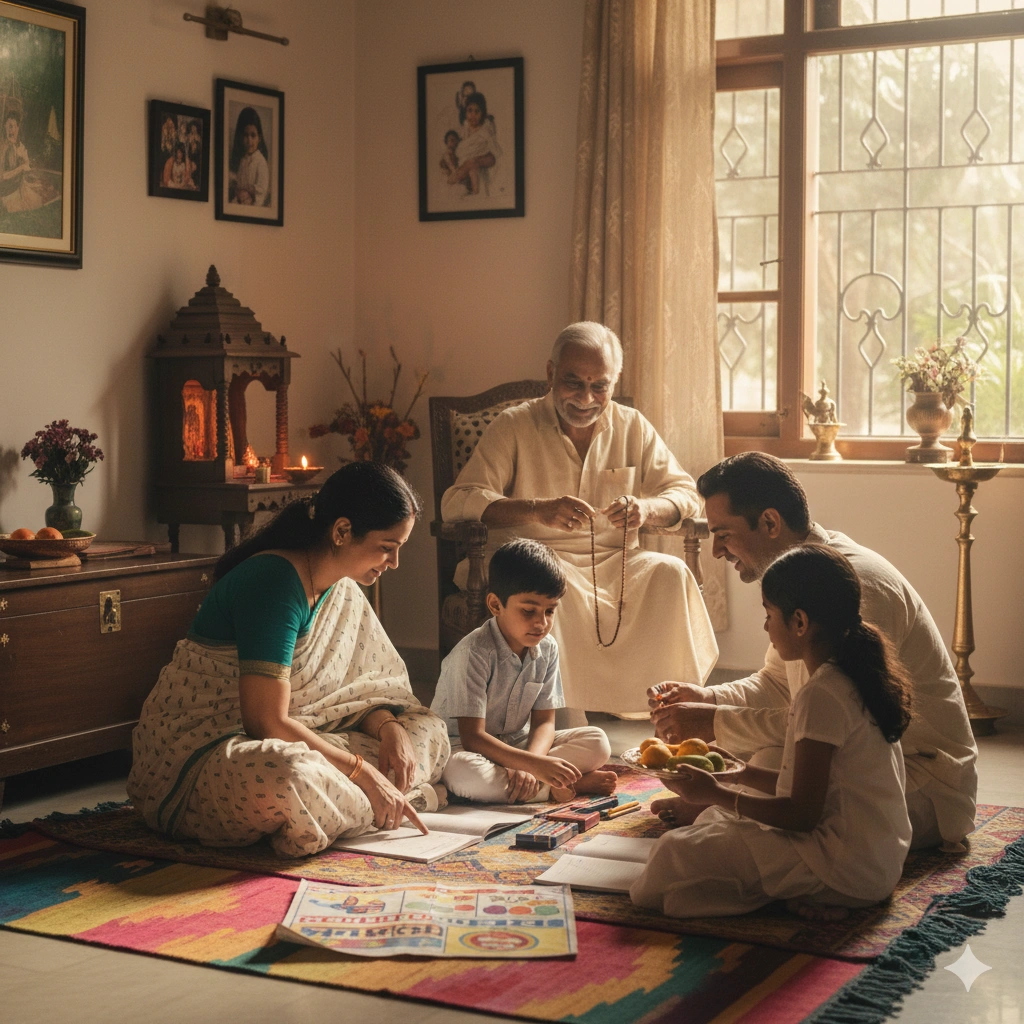
Before a child ever steps into a classroom, the seeds of honesty, empathy, responsibility, and respect are sown within the family. Children observe how adults talk to each other, handle conflict, respond to stress, and treat those who are different from them. These daily interactions quietly shape their character far more deeply than any formal lesson.
1. Home as the First School: Early Influence Matters
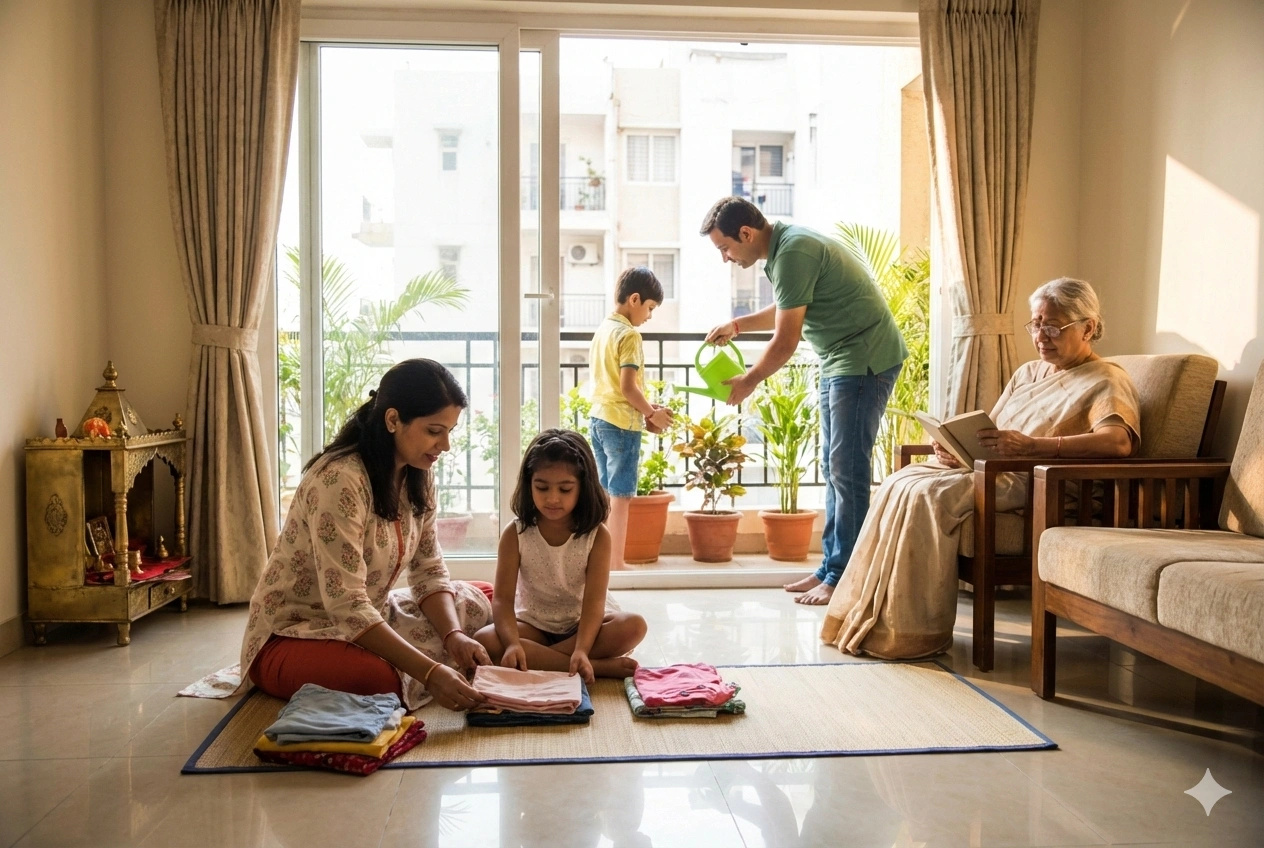
The family: A child's first social institution where values are absorbed
The family is a child's first social institution. It is within the home that children first encounter ideas of fairness, sharing, patience, cooperation, and compassion. Values are rarely learned through lectures; they are absorbed through observation.
- A child who watches parents speak truthfully, keep promises, and admit mistakes learns integrity
- A child who sees compassion towards helpers, elders, and strangers internalizes kindness
- A child who witnesses shouting, disrespect, or prejudice may normalize the same
"The education of man begins at his birth; before he can speak, before he can understand, he is already instructed."
— Jean-Jacques RousseauEducation, therefore, is not limited to school hours. Parents are the primary architects of moral understanding during the formative years, long before textbooks and exams enter the picture.
2. Head, Heart, and Hands: Nurturing the Whole Child
Johann Heinrich Pestalozzi argued that true education is the "natural, harmonious and progressive development of man's innate powers," integrating Head (intellect), Heart (emotion), and Hands (practical skills).
Balanced Development
When parents:
- Encourage questions and curiosity (Head)
- Respond with warmth, patience, and emotional support (Heart)
- Involve children in age-appropriate responsibilities at home (Hands)
they create a balanced environment for intellectual, emotional, and ethical growth.
Maria Montessori added that "The child is both a hope and a promise for mankind." She believed adults should guide rather than dominate. Parents who:
- Allow children to make small choices within clear boundaries
- Encourage them to take responsibility for tasks
- Let them solve problems instead of fixing everything instantly
are building self-discipline, accountability, and inner strength—all core elements of a strong value system.
3. How Parental Involvement Shapes Outcomes

Research shows: Parental involvement predicts both academic and behavioral success
Research consistently shows that parental involvement has a powerful effect on children's behavior and achievement, not just their marks.
Research Findings
A review of 448 studies by the American Psychological Association found that higher parent involvement is linked to better academic achievement, stronger engagement, and higher motivation in students.
Indian Study Results
An Indian study on secondary school students reported a strong positive correlation (r = .63) between parental involvement and academic achievement; parental expectations and communication with teachers were the strongest predictors of success.
These findings confirm what many parents intuitively know: children are more likely to develop discipline, responsibility, and perseverance when home and school both value effort, learning, and integrity.
4. Moral Reasoning Through Dialogue: The Piaget Lens
Jean Piaget emphasized that the goal of education is to create individuals "capable of doing new things, not simply of repeating what other generations have done." Children, he showed, actively construct their understanding of right and wrong through interaction and reasoning—not just by obeying rules.
Strengthen Moral Reasoning
Parents strengthen moral reasoning when they:
- Discuss fairness ("How would you feel if this happened to you?")
- Talk through consequences ("What might happen if we all broke this rule?")
- Explore dilemmas ("Is it ever okay to lie? Why or why not?")
- Encourage empathy ("What do you think your friend felt in that situation?")
When children understand the why behind values, they are more likely to internalize them and apply them independently in real-life situations, even when adults are not watching.
5. Indian Context: Gandhi, NEP 2020, and Value Education

Gandhi's vision: Education as all-round development of body, mind, and spirit
In India, Mahatma Gandhi viewed education as "an all-round drawing out of the best in child and man—body, mind, and spirit." Parents who live by truthfulness, simplicity, non-violence, and service provide children with a living example of Gandhi's vision.
A home where:
- Conflicts are resolved peacefully
- Diversity is respected
- Service to others is valued
becomes a natural training ground for ethical citizenship and social responsibility.
NEP 2020 Emphasis
India's National Education Policy (NEP) 2020 emphasizes:
- Holistic development and value-based education, including empathy, respect for diversity, and constitutional values
- Stronger school–family partnerships, recognizing parents as active stakeholders in children's learning and character formation
Yet, NEP 2020 can succeed only when parents and schools work together. If a child hears about honesty and respect at school but sees the opposite at home, values remain superficial. Coherence between home and school is what makes value education truly effective.
6. Parenting in the Digital Age: Guidance, Not Just Control
Today's children face influences their parents never did—social media, online gaming, streaming content, and global peer culture. These can sometimes conflict with family values or glorify materialism, aggression, or instant gratification.
Digital Age Strategies
Parents play a crucial role when they:
- Monitor digital exposure without resorting only to bans or fear
- Discuss online behavior, kindness, privacy, and cyber safety
- Help children question what they see: "Is this real? Is this right? Who benefits from this message?"
This kind of guided reflection helps children develop inner filters and discernment, enabling them to stay grounded in their value system even in a noisy digital world.
7. Practical Ways Parents Can Build a Strong Value System

Simple daily practices: The hidden curriculum of the home
Value education at home does not require special degrees or expensive resources. It grows out of simple, consistent daily practices, such as:
- Modeling honesty and respect in all relationships—especially in how parents treat each other, elders, and service workers
- Sharing meals as a family, using that time to talk about the day, current events, and feelings
- Encouraging responsibility—letting children complete tasks, own their mistakes, and learn from failure instead of rescuing them every time
- Practicing gratitude—thanking others, acknowledging effort, and noticing small blessings
- Volunteering or helping others together, even in small ways, to build empathy and social awareness
- Celebrating diversity—speaking respectfully about all communities, traditions, and viewpoints
These repeated experiences become the "hidden curriculum" of the home—the quiet but powerful set of lessons children carry into classrooms, friendships, workplaces, and society.
Conclusion: Parents as Architects of Character
In conclusion, parents are the primary architects of a child's value system. From Rousseau's insight about early influence, Pestalozzi's vision of harmonious development, Montessori's faith in guided independence, Piaget's focus on moral reasoning, to Gandhi's holistic view of education—educational thought consistently points back to the home as the cornerstone of ethical formation.
Modern frameworks like NEP 2020 build on this by encouraging deep collaboration between parents and schools to nurture responsible, empathetic, and principled citizens.
If schools shape intellect, homes shape character. Together, they ensure not only the academic success of children but also the moral strength of the nation—proving that the role of parents in building values is just as critical as the role of teachers in shaping knowledge.