How Poor School Infrastructure Impacts Students' Growth in India
A Silent Crisis in Indian Education
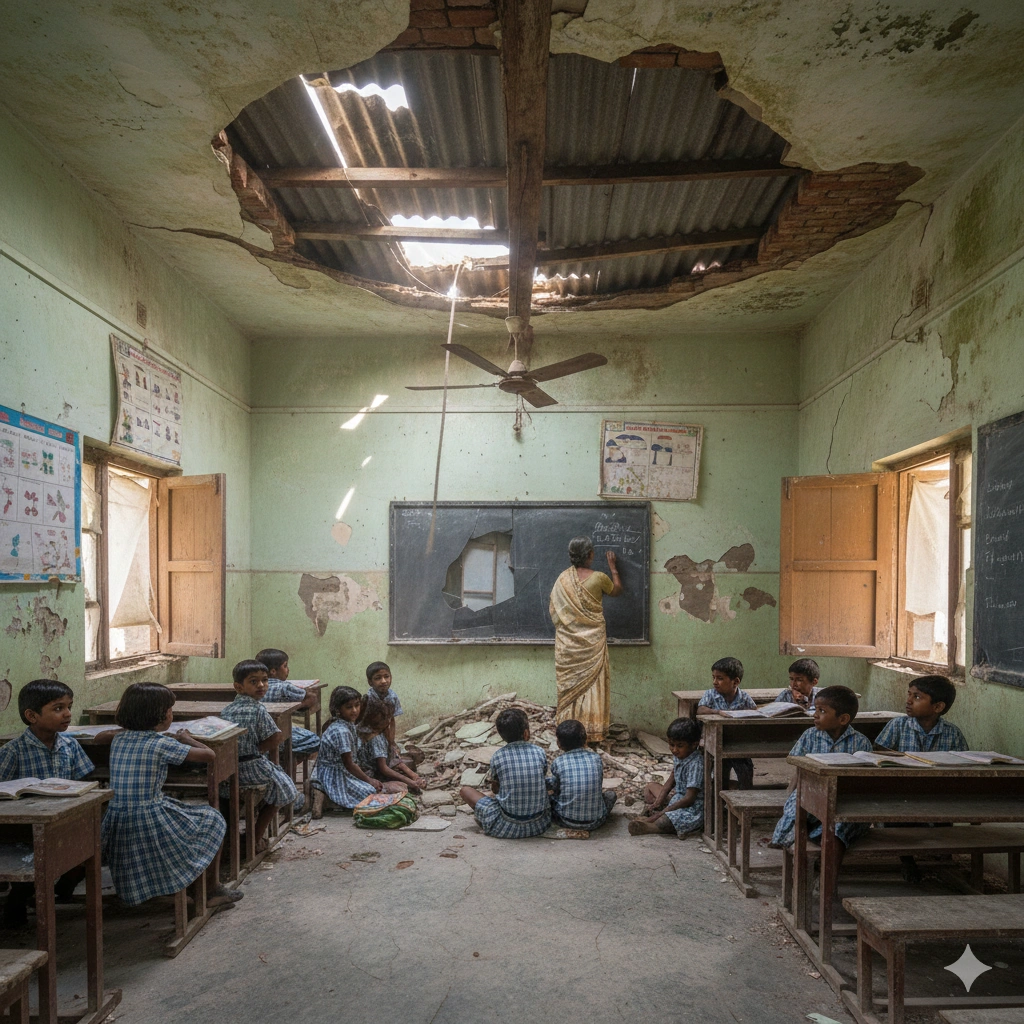
In India, while the Right to Education (RTE) Act guarantees schooling, the quality of school infrastructure varies drastically. From broken furniture to a lack of digital labs, poor infrastructure is a silent barrier preventing millions of students from reaching their potential.
"Education is the manifestation of perfection already in man."
— Swami VivekanandaBut without a conducive environment, even the most dedicated teachers struggle to bring out that perfection. In this blog, we explore the deep impact of poor infrastructure on student growth, supported by educational theories from Piaget and Vygotsky, and look at modern solutions like PM SHRI Schools.
1. The Direct Impact on Academic Learning
A school's physical environment is the "third teacher." Overcrowded classrooms, poor lighting, and a lack of ventilation directly hinder concentration.
The Science of Environment
- Plato argued that schools must foster reflection and inquiry. If a student is physically uncomfortable, cognitive processing slows down
- Lack of Resources: Without science labs or libraries, learning becomes purely theoretical. Students memorize facts instead of understanding concepts
- The Vygotsky Connection: According to Lev Vygotsky's social constructivist theory, learning happens through interaction. In cramped, under-equipped classrooms, collaborative learning—crucial for cognitive growth—becomes impossible
Key Stat
According to UDISE+ data, thousands of schools in India still lack functional computers and internet access, widening the digital divide.
2. Health, Hygiene, and Safety Concerns
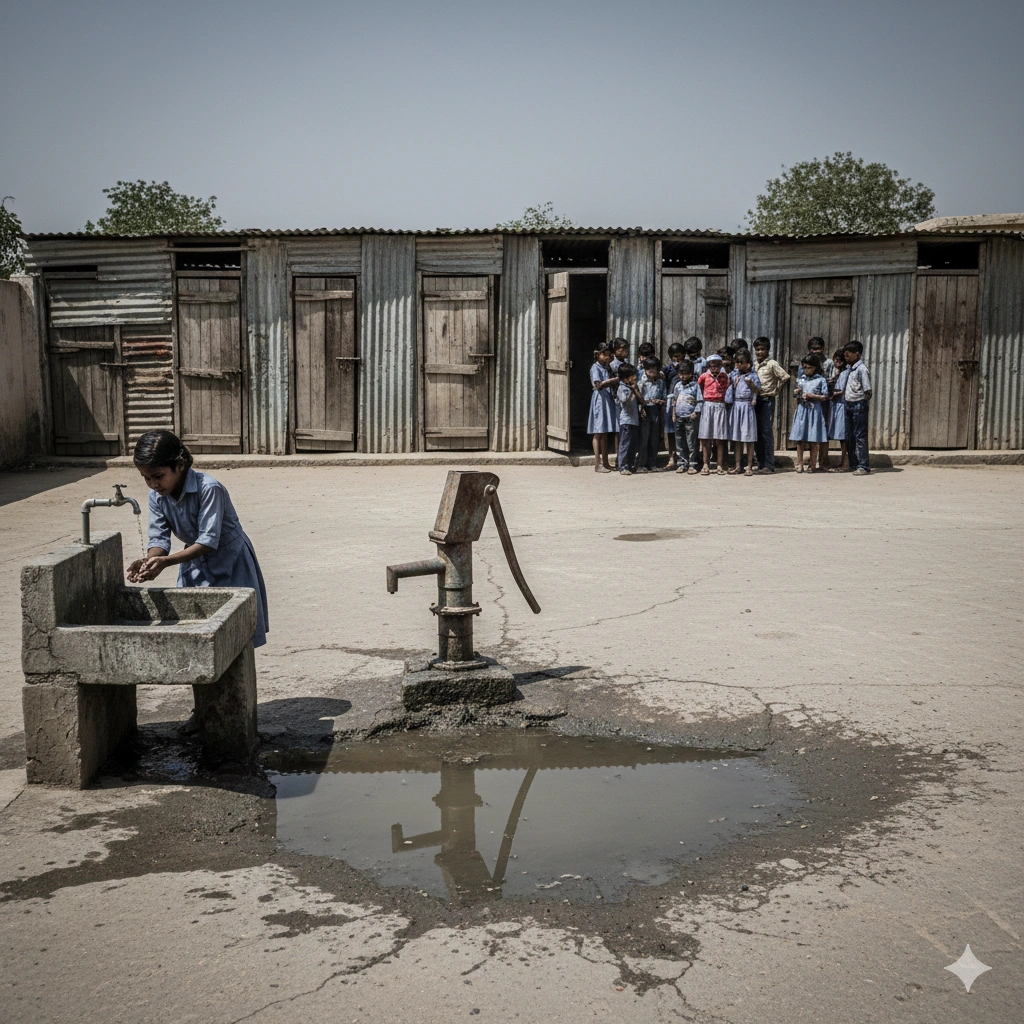
Lack of proper sanitation affects millions of students
One of the most critical issues in Indian government schools is the lack of WASH (Water, Sanitation, and Hygiene) facilities.
Sanitation & Female Student Attendance
A lack of functional toilets is a major reason for female student absenteeism in India. When girls don't feel safe or dignified, they drop out.
Mahatma Gandhi's Nai Talim: Gandhi emphasized that education must combine intellectual, moral, and physical development. Without basic sanitation, holistic education remains a dream.
Safety Risks
Dilapidated buildings and exposed wiring pose physical threats, creating an environment of fear rather than safety.
3. The Psychological & Emotional Toll
Poor infrastructure doesn't just hurt grades; it hurts self-esteem.
Motivation Killer
Walking into a neglected, dirty school every day sends a subconscious message to students: "Your education doesn't matter." This leads to disengagement.
Piaget's Theory: Jean Piaget emphasized that children learn by exploring their environment. A barren, resource-poor school suppresses curiosity and creativity, leading to boredom and frustration.
4. A Barrier to 21st-Century Skills (STEM & Digital Learning)
We are in the age of AI and robotics, yet many schools lack basic electricity.
- Experiential Learning: Modern education demands STEM labs, smart classrooms, and digital aids. Without these, students are ill-prepared for the future job market
- The Montessori Approach: Maria Montessori believed in a "prepared environment" where children develop independence. Without access to modern tools, students in under-resourced schools are denied the chance to become independent, self-directed learners
5. Widening the Gap: Inequality in Education
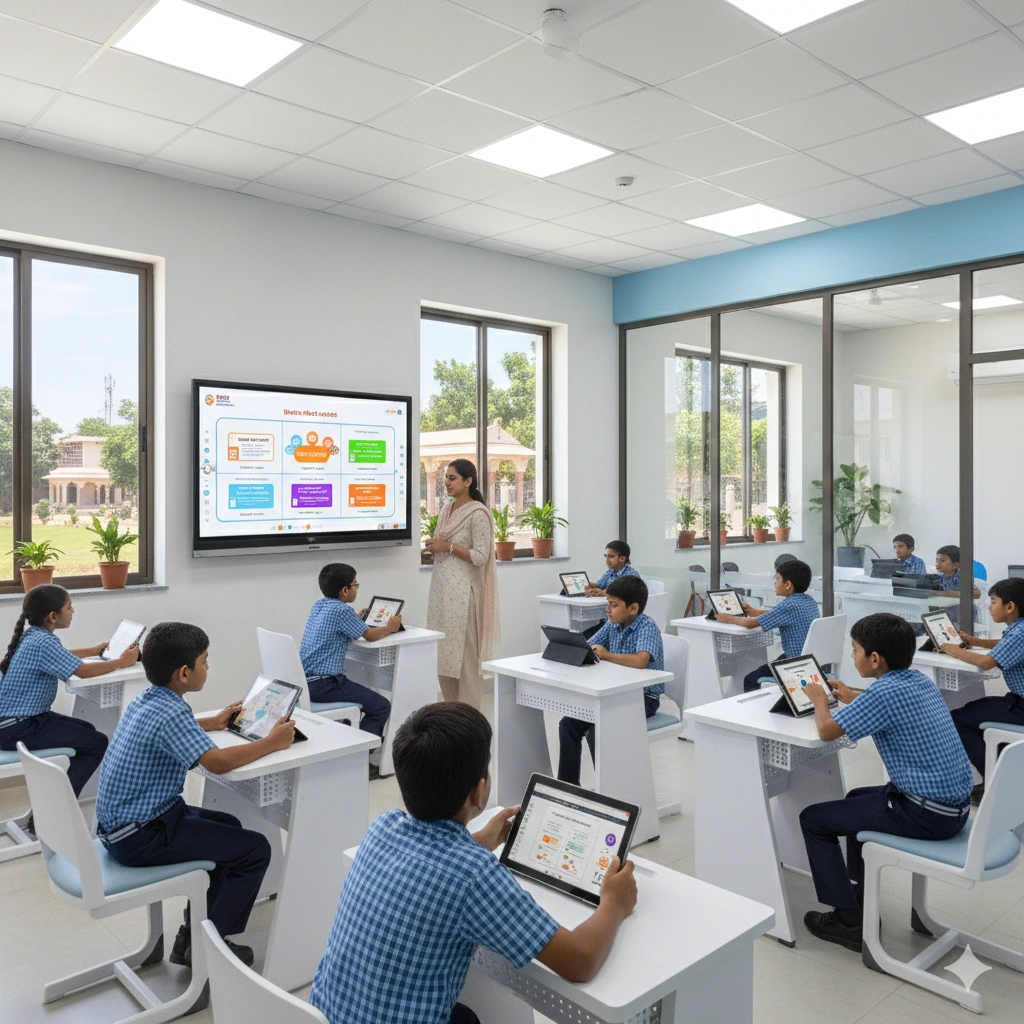
PM SHRI Schools represent the future of Indian education
Infrastructure gaps create a massive divide between the "haves" and "have-nots."
The Opportunity Gap
Students in well-funded private schools have access to swimming pools, robotics labs, and e-libraries. Meanwhile, students in low-income schools may struggle to find a desk.
Impact on Future: This disparity limits social mobility. A student without computer access today is less employable tomorrow.
6. The Way Forward: Building Better Schools
The Government of India and various organizations are waking up to this reality. Prime Minister Narendra Modi has highlighted that quality infrastructure is non-negotiable for India's future.
Key Initiatives Transforming India
Government Programs
- PM SHRI Schools: A central scheme to upgrade over 14,500 schools with modern infrastructure, smart classrooms, and green architecture
- Samagra Shiksha Abhiyan: Focuses on strengthening school infrastructure, including libraries and science labs
- Corporate Social Responsibility (CSR): Private companies are increasingly funding school sanitation and digital literacy projects
What Needs to Be Done?
- Community Participation: Parents and locals must hold authorities accountable for maintenance
- Smart Design: Schools need better ventilation, natural light, and disability-friendly access (ramps/toilets)
- Digital Integration: Internet access is now a utility, not a luxury
Conclusion
Poor infrastructure is not just a logistical problem; it is a developmental crisis. It limits learning, affects health, reduces motivation, and perpetuates inequality.
Swami Vivekananda urged, "Arise, awake, and stop not till the goal is reached."
Our goal must be a nation where every child—regardless of their background—walks into a school that is safe, stimulating, and equipped to nurture their dreams.
By investing in bricks, mortar, and technology today, we are investing in the India of tomorrow.