In India, the search for a play school often begins with the wrong questions:
- “Is it close to home?”
- “Does it have air-conditioned classrooms?”
- “Do they teach phonics?”
- “Do they celebrate all festivals?”
- “Is it affiliated with a famous brand?”
These questions matter. But they are not the most important ones.
The Problem with Indian Parents’ Play School Checklist
Indian parents today are under immense pressure. In nuclear families, especially in urban centres like Delhi, Bengaluru, Mumbai, Pune, Hyderabad, and Gurgaon, both parents often work. Grandparents may live in another city. Reliable domestic support is difficult to find. A play school or daycare becomes not just a choice but a necessity.
Unfortunately, many parents evaluate a preschool the way they would evaluate a coaching institute or a residential society—looking at infrastructure, branding, and social reputation.
But abuse and neglect do not always happen in poorly maintained centres. The recent Bengaluru case reportedly emerged from a corporate daycare located inside a reputed workplace campus. That reality should make every parent pause. Safety cannot be outsourced to reputation. It has to be verified.
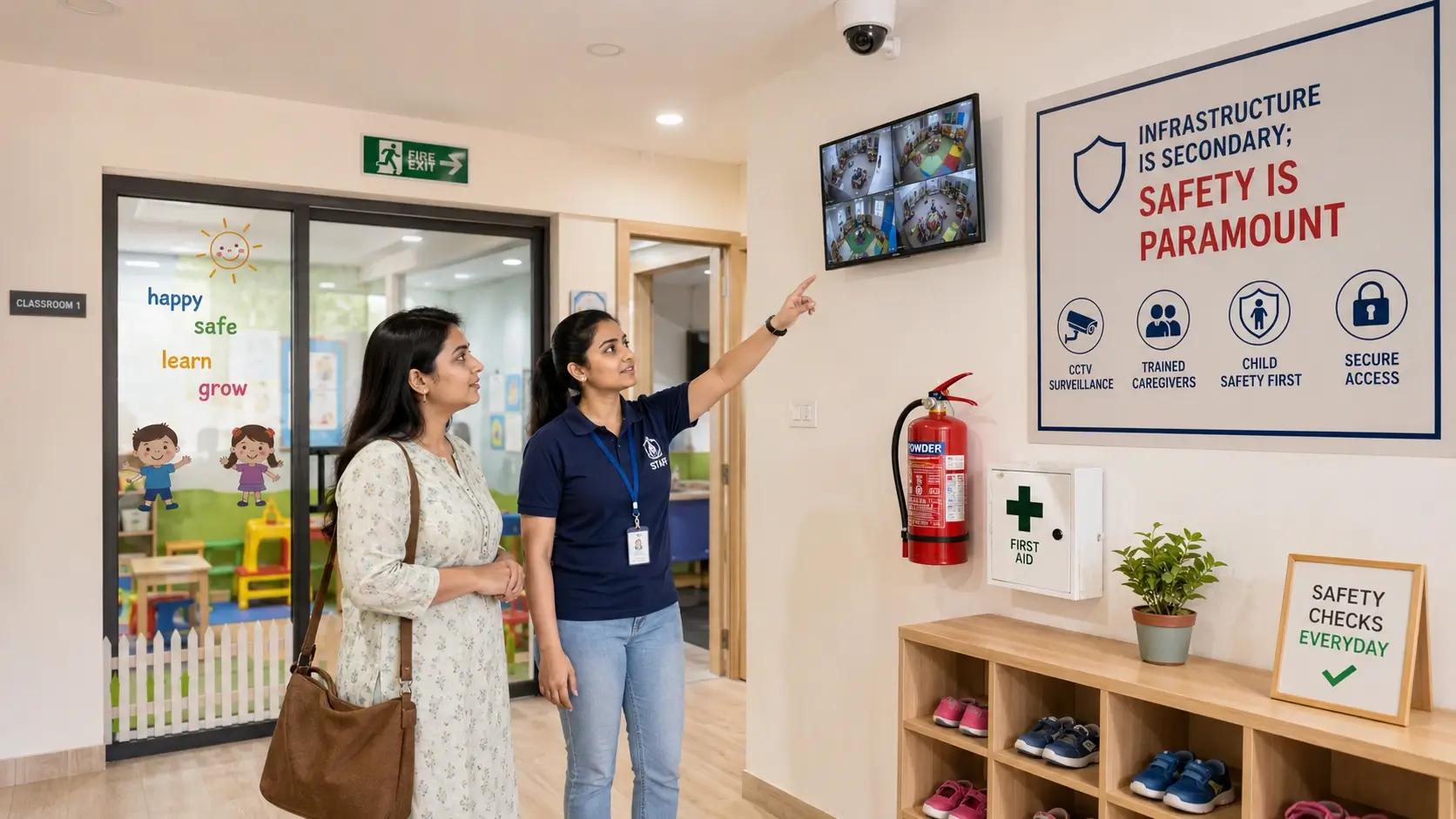
First, Observe the Adults, Not the Children
When you visit a play school, most of your attention naturally goes to the children. Are they smiling? Are they playing? But children can appear cheerful during a scheduled visit. What matters more is observing the adults. Watch the teachers and caregivers carefully.
Communication StyleDo they speak respectfully to children? Do they kneel down to make eye contact?
Emotional RegulationDo they appear rushed, frustrated, or impatient? Does the staff smile naturally, or do they appear tense?
Disciplinary ApproachAre children being threatened, shamed, or forcibly controlled?
Young children learn through relationships. If the adults in the room lack patience, empathy, or emotional regulation, no amount of colourful infrastructure can compensate.
Ask About Staff Training
Many Indian parents hesitate to ask detailed questions because they fear appearing rude or overly demanding. Do not hesitate. A centre that genuinely prioritises child safety will answer these questions confidently and transparently. A centre that becomes defensive should raise concerns.
Qualifications
What credentials do the caregivers hold?
Background Checks
Are thorough police and reference checks conducted?
Protection Training
Have staff received formal child protection training?
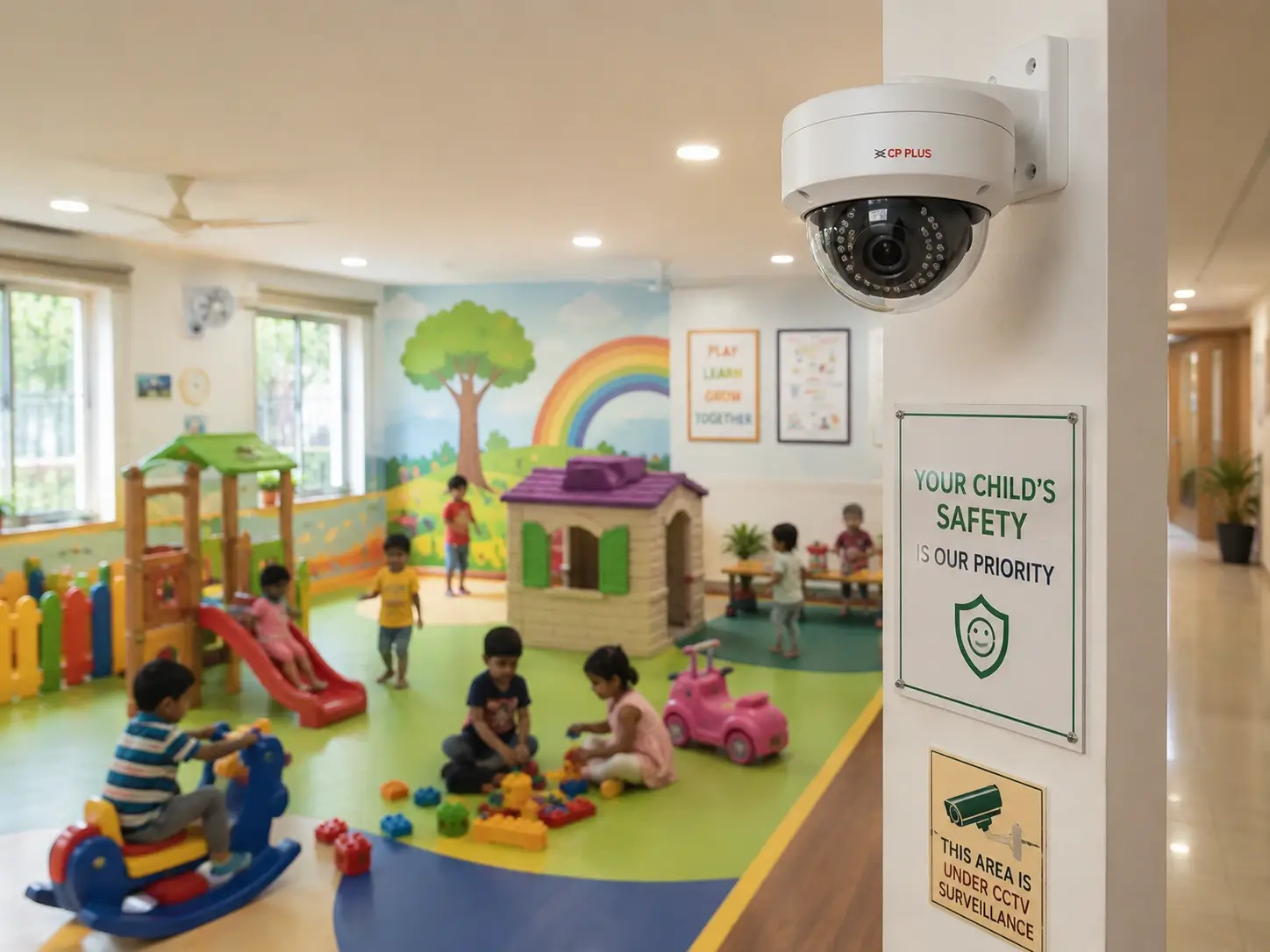
CCTV Cameras Are Not Enough
Many parents now ask only one question: “Do you have CCTV cameras?” The answer may be yes. But that alone means very little.
Instead, ask: Are all classrooms covered? Are washroom entry and exit areas monitored? Who reviews the footage? How long is footage stored? Can parents request access if concerns arise? Is there a policy for surprise audits?
Technology supports safety. It does not replace accountability. In fact, some of the most disturbing childcare abuse cases in India have surfaced despite the presence of cameras. The real question is whether someone is actively monitoring what those cameras capture.
Never Ignore Your Child’s Behavioural Changes
Children between two and five years often cannot articulate abuse or mistreatment. Instead, they communicate through behaviour. Parents should pay attention if a child suddenly:
Displays extreme reluctanceCries excessively before school or refuses to enter the building.
Shows regression or disturbancesExperiences sleep disturbances or regresses in toilet training.
Exhibits unusual fear or angerShows unexplained aggression or becomes fearful around certain adults.
Indian families sometimes dismiss these signs as "adjusting," "being stubborn," or assume "all children cry." Sometimes that is true. But sometimes, children are trying to communicate distress using the only language available to them.
Visit Unexpectedly
One of the simplest and most effective strategies is also one of the least used: visit unexpectedly. Not to create conflict, but to observe reality.
A scheduled annual day or an open house event reveals very little. A surprise visit at 11:30 a.m. on an ordinary Tuesday tells you far more about how children are actually treated. If a centre strongly discourages unscheduled visits, parents should ask why. Transparency and trust go together.
Pay Attention to Staff Stability
A frequently overlooked indicator of quality is staff retention. A play school where caregivers leave every few months may indicate deeper problems such as poor management, inadequate salaries, burnout, or lack of oversight.
Children, especially toddlers, need consistency. Constantly changing caregivers can affect both emotional security and safety.
Talk to Other Parents
Google reviews can be manipulated. WhatsApp groups, resident welfare associations, local parenting communities, and conversations at the school gate often reveal far more.
Ask parents how promptly the school communicates concerns, how teachers handle crying children, if there have been previous complaints, and how responsive the management is. In India, word-of-mouth remains one of the most powerful indicators of trustworthiness.

Examine the Child Protection Policy
Every play school should have a written child protection policy. Ask to see it. The policy should explain how complaints are reported, who investigates them, what disciplinary action is taken, and whether mandatory reporting procedures exist.
If a school has no documented child safety policy, parents should consider that a serious warning sign.
Trust Your Instincts
Parents often sense that something is wrong long before they have evidence. Perhaps a teacher appears excessively controlling. Perhaps a caregiver avoids eye contact. Perhaps the environment simply feels uncomfortable.
Too often, parents ignore these instincts because the school has good branding, expensive fees, or strong recommendations. But intuition developed through parenting is valuable. If something feels wrong, investigate further.
The Hardest Truth
The Bengaluru incident is heartbreaking not only because of what allegedly happened, but because the children involved were too young to protect themselves. Ultimately, the responsibility rests with adults. No play school can ever replace parental vigilance.