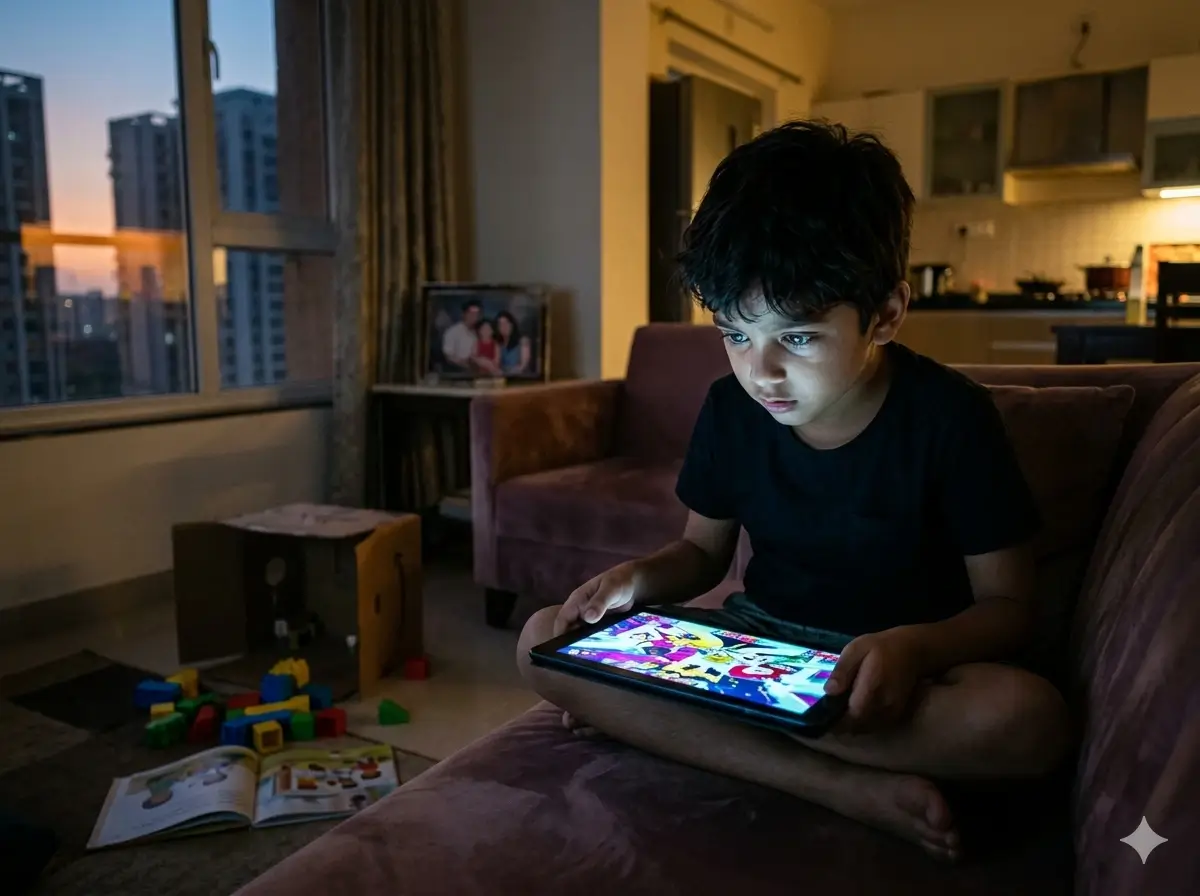
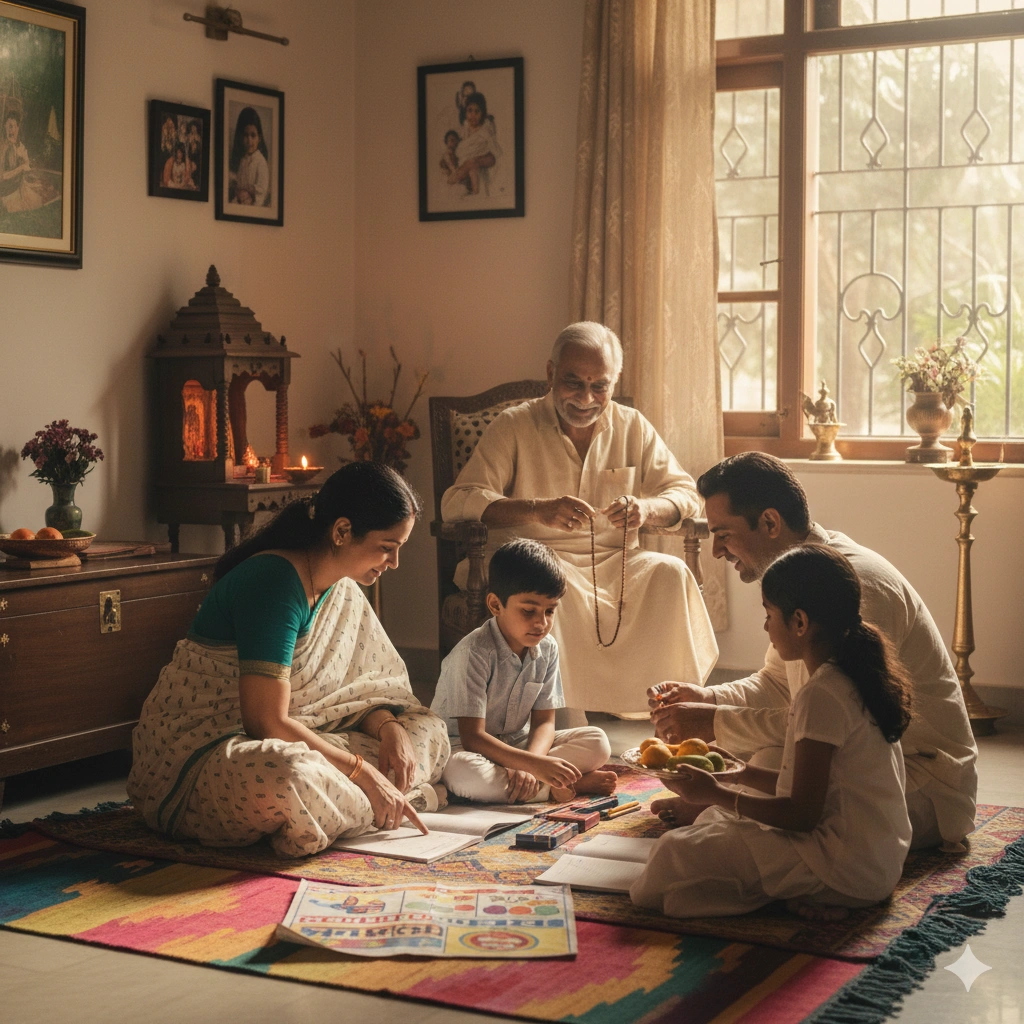
Five Essential Parenting Strategies for Healthy Child Development in India
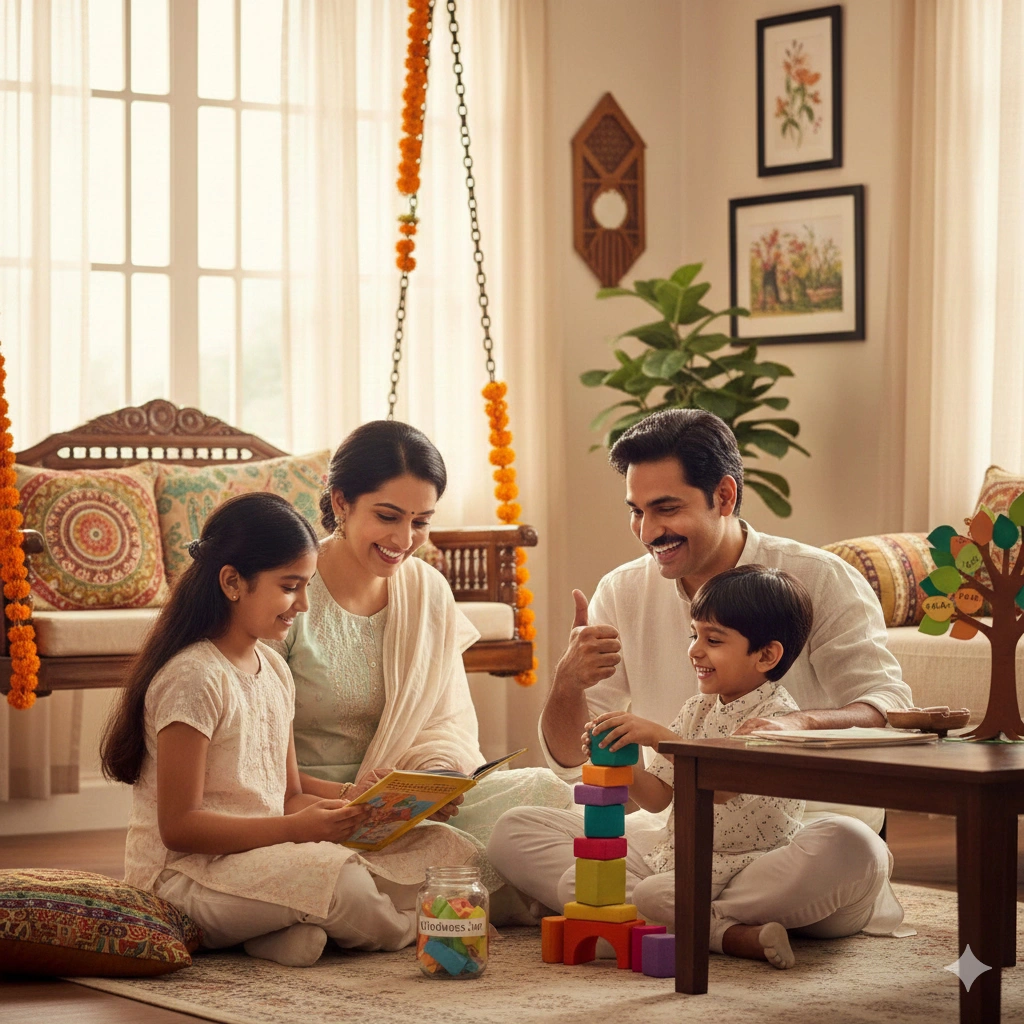
"The thing about parenting rules is there aren't any. That's what makes it so difficult."
— Ewan McGregorMany Indian parents struggle with communication gaps that lead to conflicts, emotional distance, and broken trust with their children. The National Education Policy (NEP) 2020 recognizes that a child's holistic growth depends on collaboration between schools, families, and communities. However, without practical guidance on how to build stronger parent-child relationships, many parents default to authoritarian approaches that damage confidence and emotional security.
To address this gap, we've compiled five evidence-based parenting strategies for Indian families that foster confident, emotionally resilient children while strengthening family bonds.
1. Open Communication and Active Listening: The Foundation of Trust
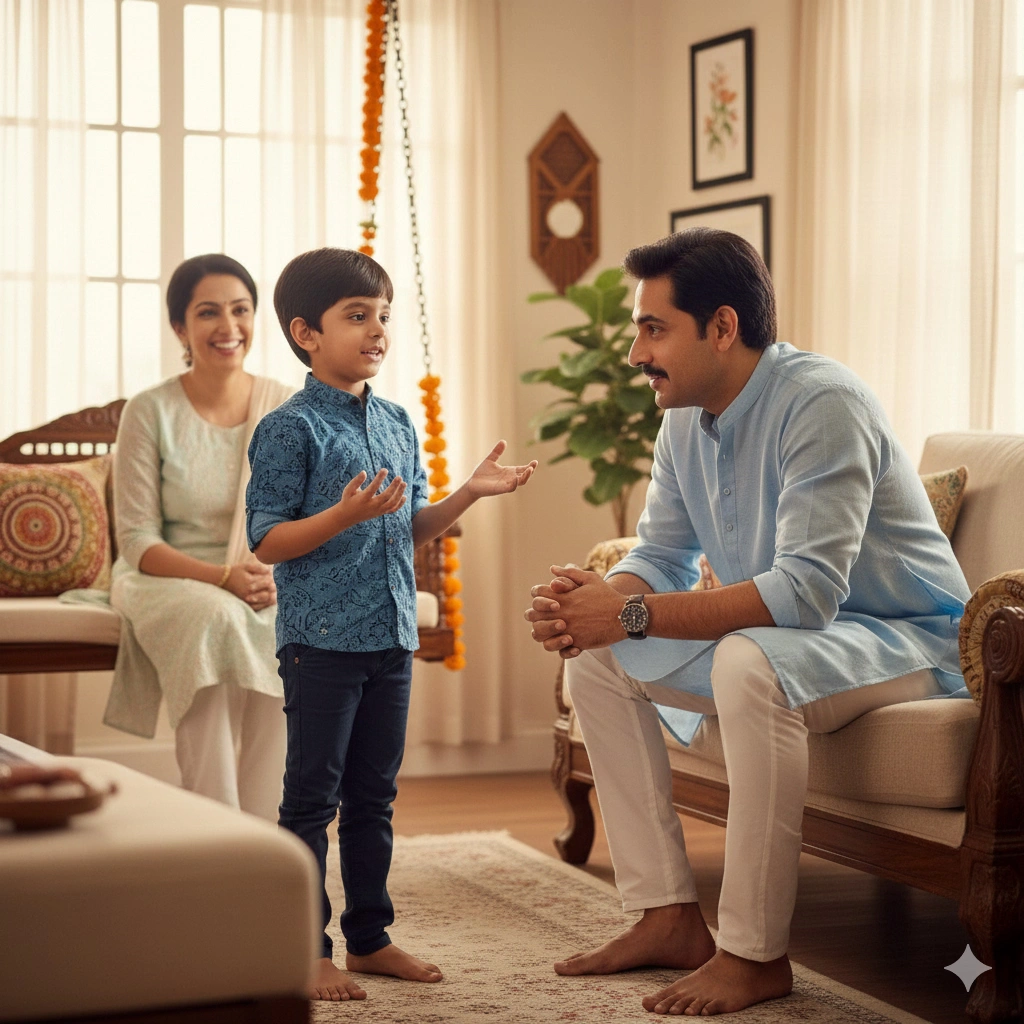
Active listening builds trust and emotional security
One of most damaging parenting mistakes in Indian households is one-sided communication. Parents often dictate expectations without genuinely listening to their child's perspective. This creates emotional distance that teenagers later cannot repair.
Active listening means putting away your phone, making eye contact, and truly understanding what your child feels—even when you disagree. When children feel heard, they develop confidence and self-worth. Research shows that children who experience respectful two-way communication with parents are more likely to approach them during crises rather than seeking guidance from unreliable online sources.
Instead of Judgment, Choose Understanding
Don't say: "You failed your math exam because you don't study enough."
Instead say: "I see you're struggling with math. What happened, and how can I help?"
This shift from judgment to understanding rebuilds trust and opens pathways for honest dialogue throughout your child's life.
Actionable Tip
Set aside 15 minutes daily for tech-free conversation with your child. Ask about their day, listen without interrupting, and respond with empathy even if you disagree with their choices.
2. Share Age-Appropriate Responsibilities to Build Confidence
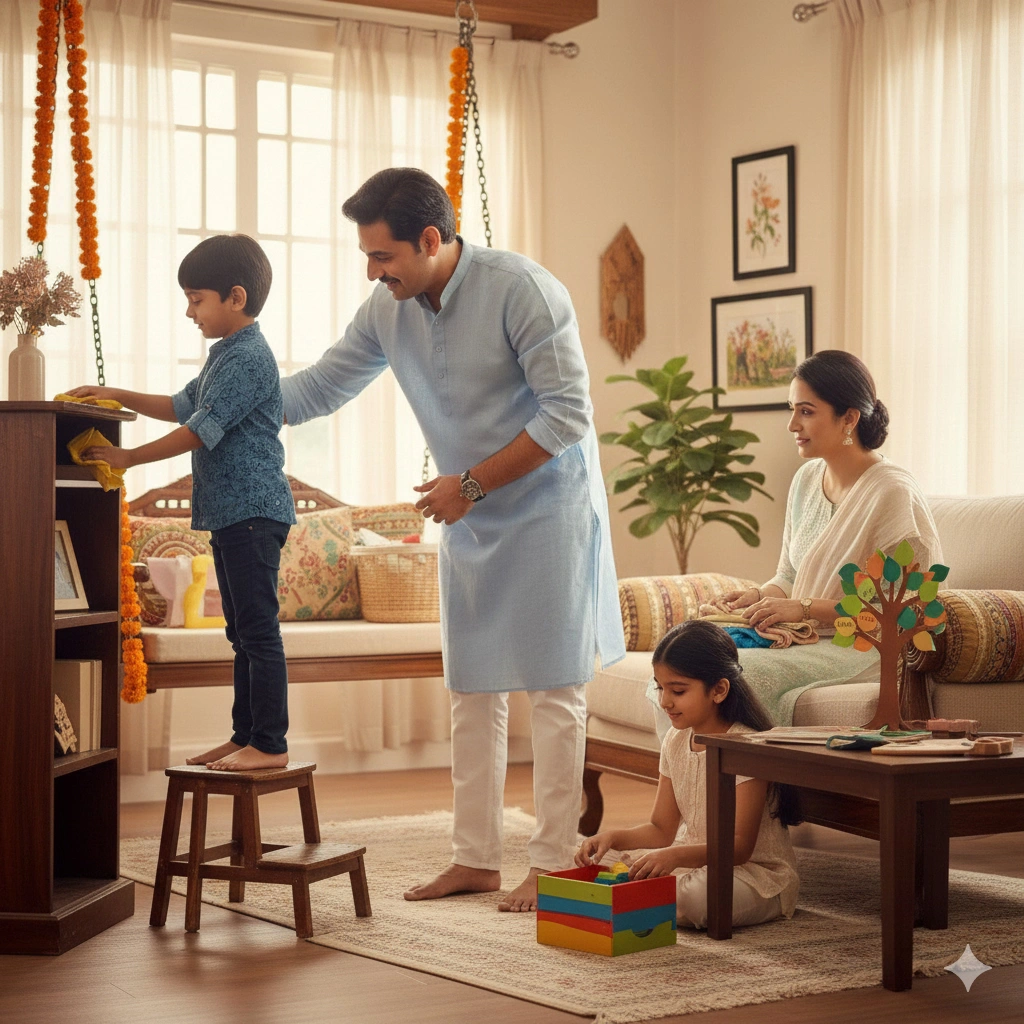
Responsibilities build self-esteem and accountability
In most Indian households, parents shoulder all household responsibilities while expecting children to focus only on studies. This approach backfires. Children who never take responsibility never develop self-esteem, accountability, or leadership skills.
The NEP 2020 emphasizes experiential learning and real-life skills. Children who participate in household decision-making and responsibilities—age-appropriate chores, family budget discussions, or helping a sibling with homework—develop a sense of capability and trust in themselves.
A child who sets the table, manages their schoolbag, or helps plan a family meal isn't just doing a chore. They're internalizing: "I am trusted. I am capable. I matter to my family." This builds intrinsic motivation and independence that no tuition class can provide.
Actionable Tip
Assign one household task to each child based on age:
- For younger children: Organizing toys or watering plants
- For teenagers: Meal planning or managing their own study schedule
Praise effort over perfection.
3. Respect Your Child's Perspective, Even If You Disagree

Validating emotions builds emotional intelligence
A child's fears, dreams, and frustrations might seem trivial to adults, but they're deeply meaningful to them. Dismissing these feelings—"Don't be silly, there's nothing to fear"—teaches children that their emotions are invalid. When parents invalidate emotions, children stop sharing and seek guidance elsewhere.
The NEP 2020 stresses socio-emotional learning and mental health awareness. A supportive home where children feel emotionally safe encourages them to approach parents during stress, failure, or confusion.
Respecting your child's perspective doesn't mean agreeing with everything. It means acknowledging their reality: "I understand you're anxious about the school transfer. That's valid. Let's talk about how we handle this together."
Actionable Tip
When your child shares a concern, pause before problem-solving. First, validate: "I hear you. That sounds difficult." Then ask, "How do you feel about this?" This prevents emotional dismissal and builds trust.
4. Avoid Comparisons and Celebrate Individuality
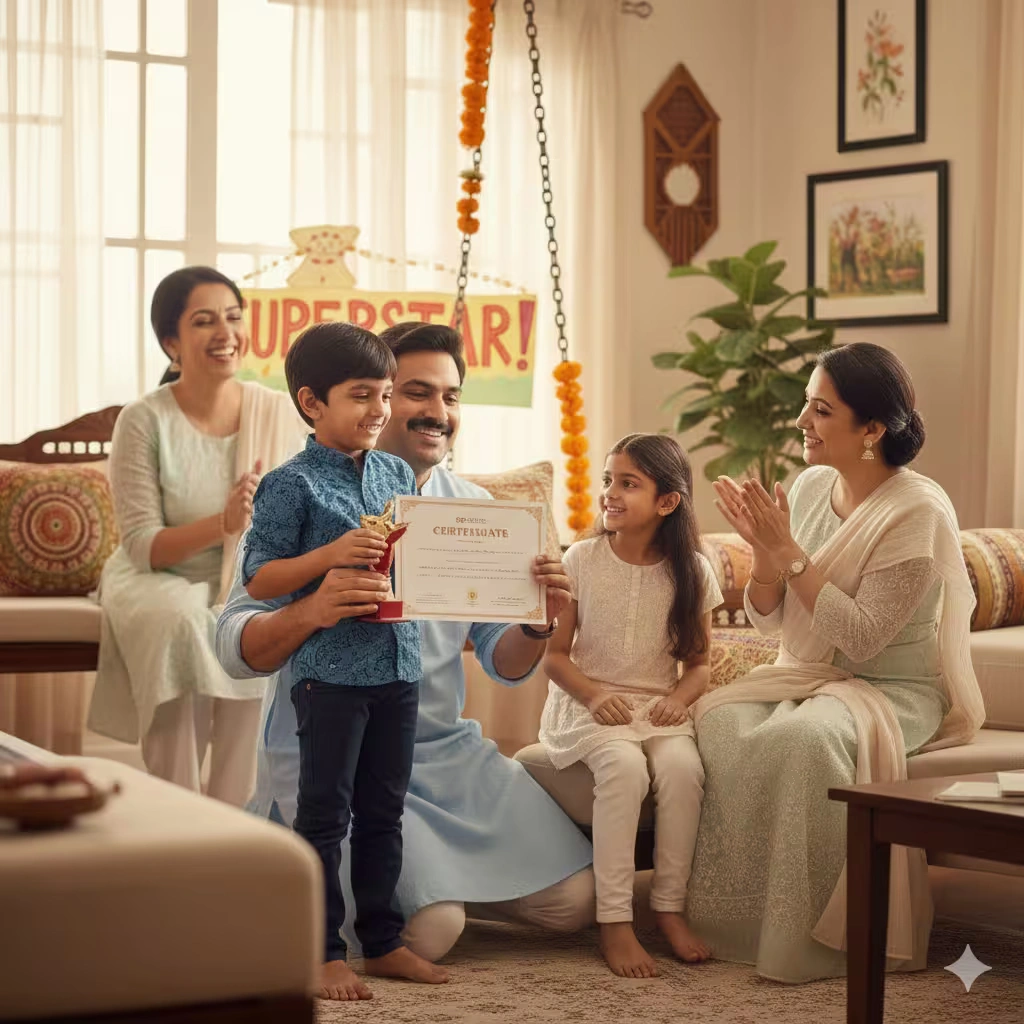
Every child has unique strengths worth celebrating
Comparison is perhaps the most damaging parenting habit in India. "Why can't you be like your cousin?" or "Your friend scored higher" might seem like motivation, but they destroy self-esteem and fuel anxiety.
Children who are constantly compared develop perfectionism, performance anxiety, and fragile self-worth dependent on external validation. The NEP 2020 strongly advocates moving away from uniform benchmarks and recognizing individual differences.
Instead of comparisons, focus on personal growth: "You improved by 5 marks compared to last month. I'm proud of your effort." This builds intrinsic motivation—children study because they want to improve, not because they fear judgment.
Remove Comparative Comments Entirely
Replace: "Why did you score less than Raj?"
With: "What's one thing you learned this month? What will you focus on next?"
5. Create a Fear-Free Home: Safety Over Punishment

A fear-free home fosters honesty and resilience
Many Indian households rely on physical punishment or emotional humiliation to discipline. "Fear-based discipline" produces compliance, not learning. Children in fear-based homes hide mistakes, lie, and eventually distance themselves from parents.
The NEP 2020 explicitly discourages punitive practices and advocates for nurturing, inclusive environments. Children who feel safe approaching parents with failures become resilient, honest, and emotionally strong.
When mistakes happen, pause and revisit the conversation later when emotions settle. Ask: "What did you learn? How will you handle this differently?" This teaches accountability without shaming.
Actionable Tip
Replace physical punishment with natural consequences. If homework is incomplete, the result is a low grade—the actual consequence. This is more educational than any scolding.
The Power of Parental Reflection
Beyond these five strategies lies a crucial practice: self-awareness in parenting. Every parent should regularly reflect on their parenting style. What's working? What isn't? What three aspects can you improve this month?
The NEP 2020 positions parents as co-educators. The most impactful parenting change happens when parents treat their children with equal dignity—not as "less capable" but as individuals worthy of respect.
Conclusion: Connection Over Perfection
Healthy parenting isn't about having all the answers. It's about building connection through understanding, respect, and emotional safety. Behind every confident child who believes in themselves is a parent who believed first.
By fostering open communication, sharing responsibilities, respecting your child's perspective, celebrating individuality, and creating a fear-free home, you raise not just academically successful children, but compassionate, resilient, self-aware individuals prepared to thrive in an ever-changing world.
The journey of parenting in India requires patience, reflection, and above all, willingness to grow alongside your child.
About SabKiShiksha
SabKiShiksha provides expert guidance on education, child development, parenting strategies, and teacher professional development. Our mission is to empower parents and educators with practical, research-backed approaches to support children's holistic growth and emotional well-being.
Need personalized parenting guidance? Connect with our educational experts through SabKiShiksha for one-on-one consultations.