This raises an important question: Does spending long hours in school actually enhance learning, or does it limit valuable learning opportunities that take place outside the classroom?
The answer deserves thoughtful consideration, especially in an era when education is increasingly recognized as something that extends far beyond textbooks and report cards.
Learning Does Not End at the School Gate
John Dewey, one of the most influential educational philosophers, famously said, “Education is not preparation for life; education is life itself.”
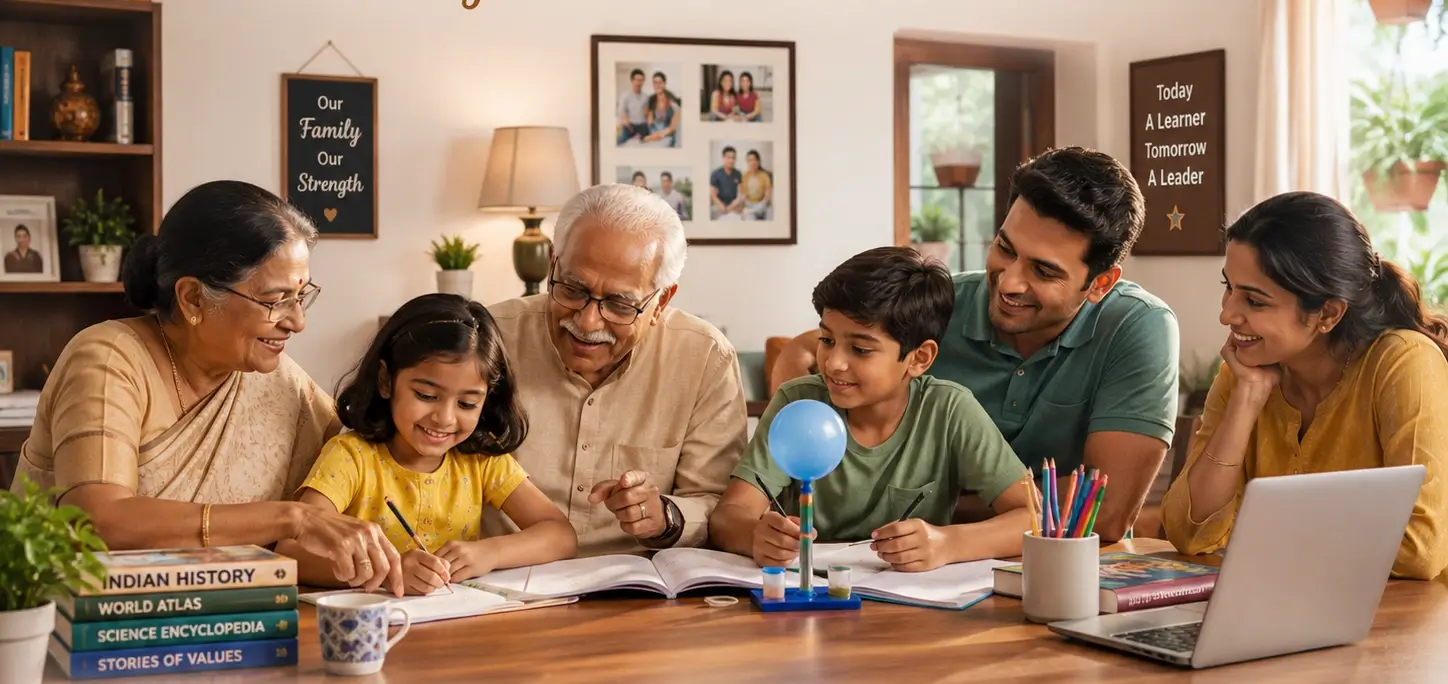
Learning occurs everywhere—in conversations with grandparents, while helping parents in household chores, through books, travel, play, hobbies, and simple observations of everyday life.
Yet many children return home after spending seven or eight hours in school only to engage in homework and coaching classes. Little time remains for self-directed learning, creativity, or meaningful family interactions.
When every hour is structured, children lose opportunities to discover their own interests.
Home Is the First School
Long before formal schools existed, children learned within families and communities.
Maria Montessori believed, “The child develops not by what he is taught but by what he experiences.”
At home, children acquire life skills that no textbook can fully teach:
Parents and grandparents become teachers in ways that examinations cannot measure.
When children spend most of their waking hours in school or coaching institutes, these forms of learning often receive less attention.
The Importance of Unstructured Time
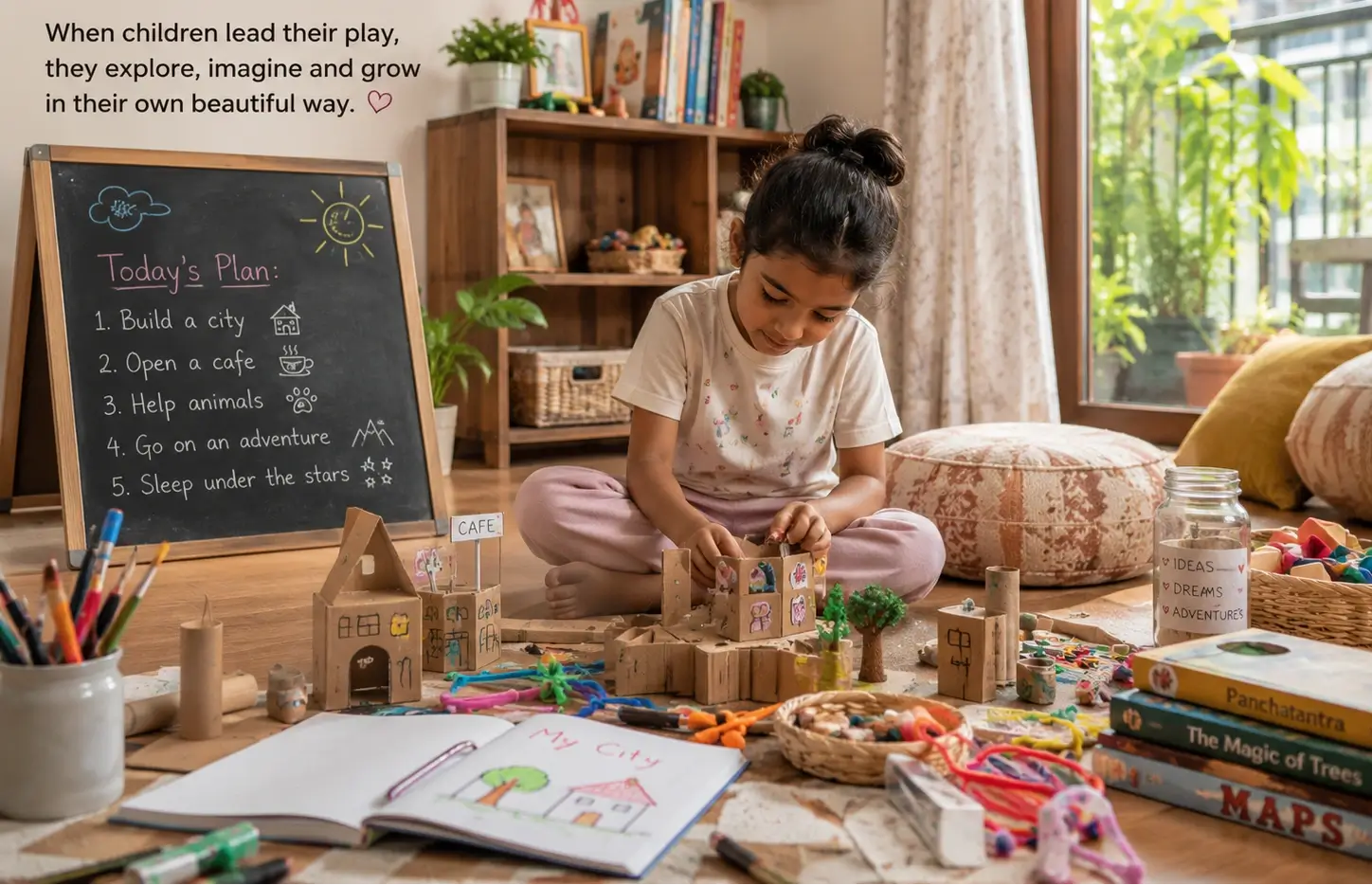
Modern neuroscience emphasizes the importance of rest and free play in cognitive development.
Albert Einstein once remarked, “Play is the highest form of research.”
Unstructured time allows children to:
Read
Read books of their choice.
Hobbies
Pursue hobbies and explore music and art.
Imaginative Play
Engage in unstructured, imaginative play.
Think
Reflect and think independently, developing creativity.
Ironically, excessive schedules can suppress curiosity rather than nurture it.
A child constantly occupied with classes and assignments may become efficient at completing tasks but may struggle to think independently.
Does More Time Mean Better Learning?
The assumption that longer hours automatically produce better outcomes is increasingly being questioned.
Confucius wisely observed:
“I hear and I forget. I see and I remember. I do and I understand.”
Understanding grows through experience and application, not merely through prolonged exposure to instruction.
Research around the world suggests that quality matters more than quantity. A focused and engaging school day may be more effective than a longer one filled with repetitive activities.
Learning efficiency decreases when children become tired and overloaded.
The Need for Family Conversations
Children today often spend more time with teachers and screens than with parents.
Yet family conversations contribute immensely to language development, emotional security, and moral values.
Mahatma Gandhi defined education as “an all-round drawing out of the best in child and man—body, mind and spirit.”
Such holistic development requires active participation from families.
Dinner-table discussions, storytelling sessions, shared reading, and simple daily interactions help children develop confidence and communication skills.
Long school hours, combined with commuting and homework, often leave little room for these precious moments.

The Rise of Homework and Coaching Culture
For many students, the school day does not end when the final bell rings.
Homework, private tuition, and online classes continue late into the evening.
The result is a childhood increasingly dominated by schedules and expectations.
Rabindranath Tagore warned against reducing education to mechanical instruction. He wrote:
“The highest education is that which does not merely give us information but makes our life in harmony with all existence.”
A child who has no time to play, dream, or simply be curious may achieve high marks yet miss out on experiences essential for overall development.
Home Learning Is Real Learning
Learning at home is often underestimated.
Children learn mathematics while shopping with parents.
They develop scientific thinking while cooking.
They understand history through family stories.
They acquire social skills through community interactions.
They cultivate empathy by caring for younger siblings or pets.
These experiences build character and practical wisdom.
Aristotle said, “Educating the mind without educating the heart is no education at all.”
Home provides the emotional foundation that schools alone cannot offer.

Finding the Right Balance
This does not mean schools should function for only a few hours or that formal education is unimportant.
Schools play a vital role in providing knowledge, structure, friendships, and exposure to diverse ideas.
However, education should be seen as a partnership between school and home rather than a competition between the two.
Children need:
Plato advised:
“Do not train children to learning by force and harshness, but direct them to it by what amuses their minds.”
Long school days may create the illusion of productivity, but genuine learning depends on balance.
Conclusion
The question is not whether children should spend time in school—they certainly should. The real question is whether increasing school hours automatically translates into better education. As society evolves, we must recognize that learning is not confined to classrooms. Home, family, play, books, and life experiences are equally powerful teachers.