When School Feels Scary — How Teachers Can Turn Anxiety Into Confidence
Evidence-based, classroom-ready strategies to help first-time schoolgoers feel safe, seen, and ready to learn.
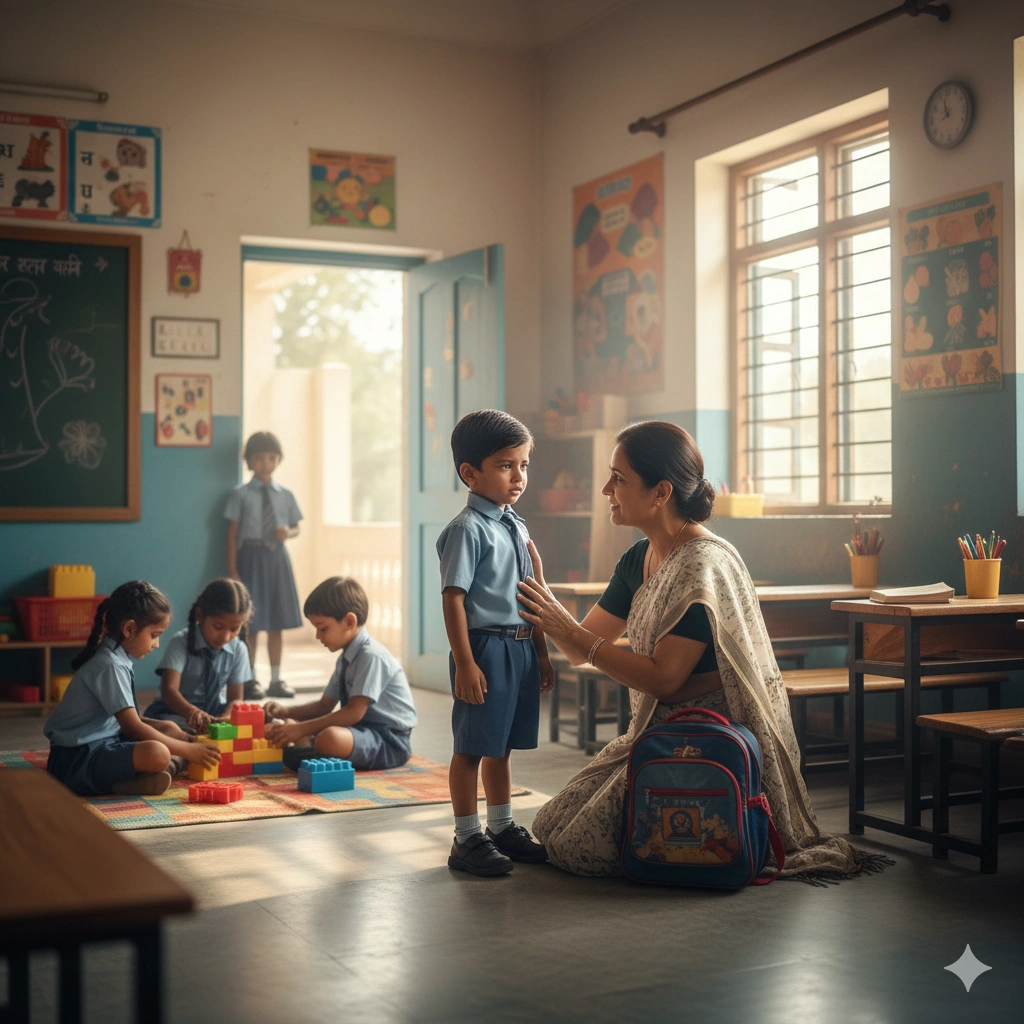
Why Do Children Feel Anxious About Starting School?

For many children, the school gate is the site of their first major emotional challenge
School entry anxiety is developmentally normal, not a sign of defiance or weakness. Young children are still building emotional regulation skills, and their sense of safety depends heavily on familiar adults and routines. When they enter school, they face multiple challenges simultaneously:
- Separation from primary caregivers — often for the first time
- Unfamiliar adults and peers in a new social setting
- New rules, routines, and sensory stimulation all at once
- Performance expectations they have never encountered before
Anxiety shows up differently in each child. Some cry openly or cling to parents at drop-off. Others become unusually quiet, withdraw from activities, show irritability, complain of stomachaches, or resist attending school. These behaviours are expressions of stress, not misbehaviour. Teachers who read these cues as communication are far better positioned to respond effectively.
Establish Predictability With Daily Routines
Uncertainty is the biggest trigger of childhood anxiety. Young children lack the cognitive maturity to anticipate what comes next — so the unknown feels threatening. Predictable classroom routines are one of the most powerful anxiety-reduction tools available to any teacher.
What Teachers Can Do
- Create and consistently follow a daily schedule — same order of activities each day
- Display a visual timetable with pictures representing each activity (circle time, snack, play, story time)
- Give advance warnings before transitions — "In five minutes, we will clean up and sit on the carpet"
- Maintain consistent arrival and dismissal procedures so children know exactly what to expect
When children can predict what happens next, their brain stops scanning for threats. Routine builds psychological safety — and safety is the prerequisite for learning.
Build Strong Teacher–Child Relationships
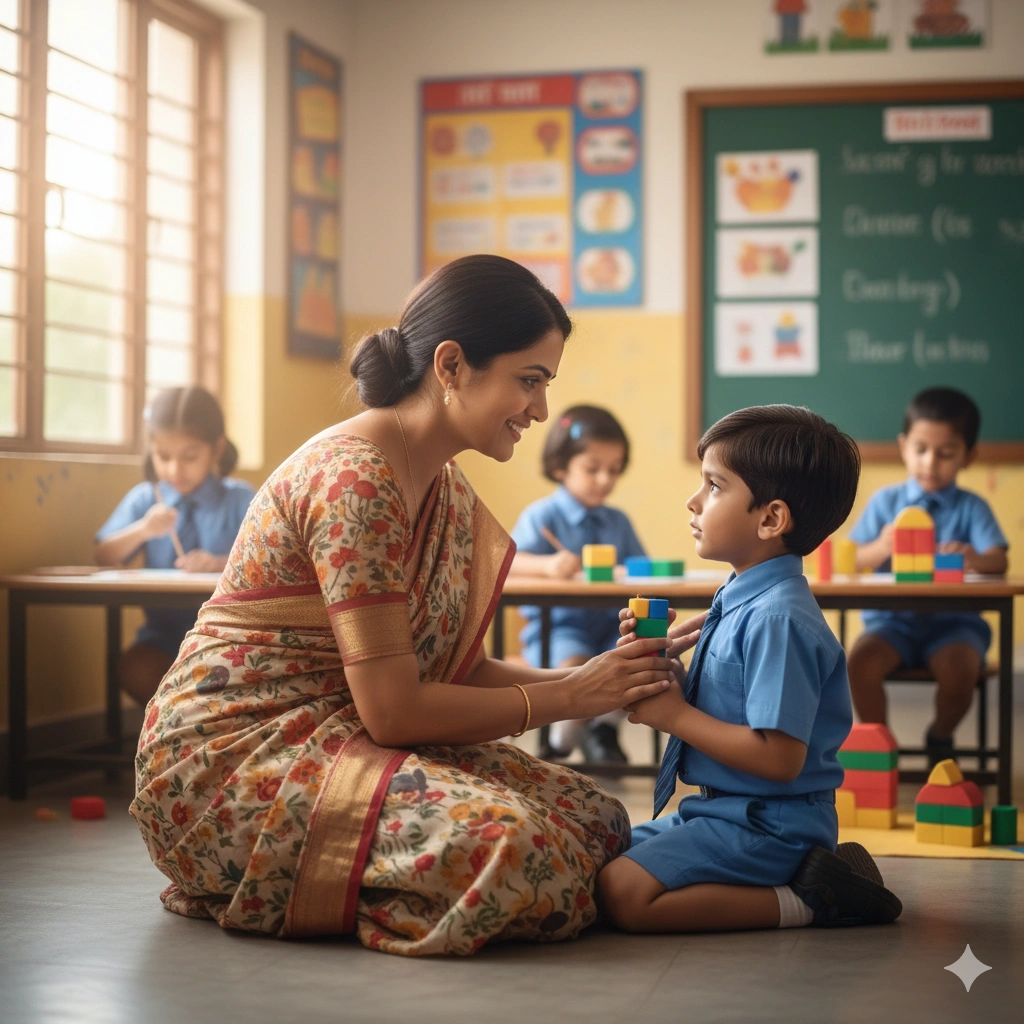
Research confirms that warm teacher–child relationships are among the strongest predictors of early emotional regulation
Research consistently shows that the quality of the teacher–child relationship is one of the strongest predictors of emotional regulation, social adjustment, and academic engagement in early childhood. A landmark study involving 373 preschool children found a significant correlation between positive teacher–child relationships and better emotion regulation skills. For anxious children, the teacher often becomes a secondary attachment figure — the trusted adult they look to for safety cues during school hours.
Simple Relationship-Building Actions
- Greet every child individually at the classroom door — a warm smile and their name creates instant connection
- Use the child's name frequently throughout the day
- Get down to their eye level during conversations — it signals respect and safety
- Offer calm, steady reassurance — a brief "I'm glad you're here today" can significantly reduce anticipatory anxiety
Support Healthy Separation at Drop-Off
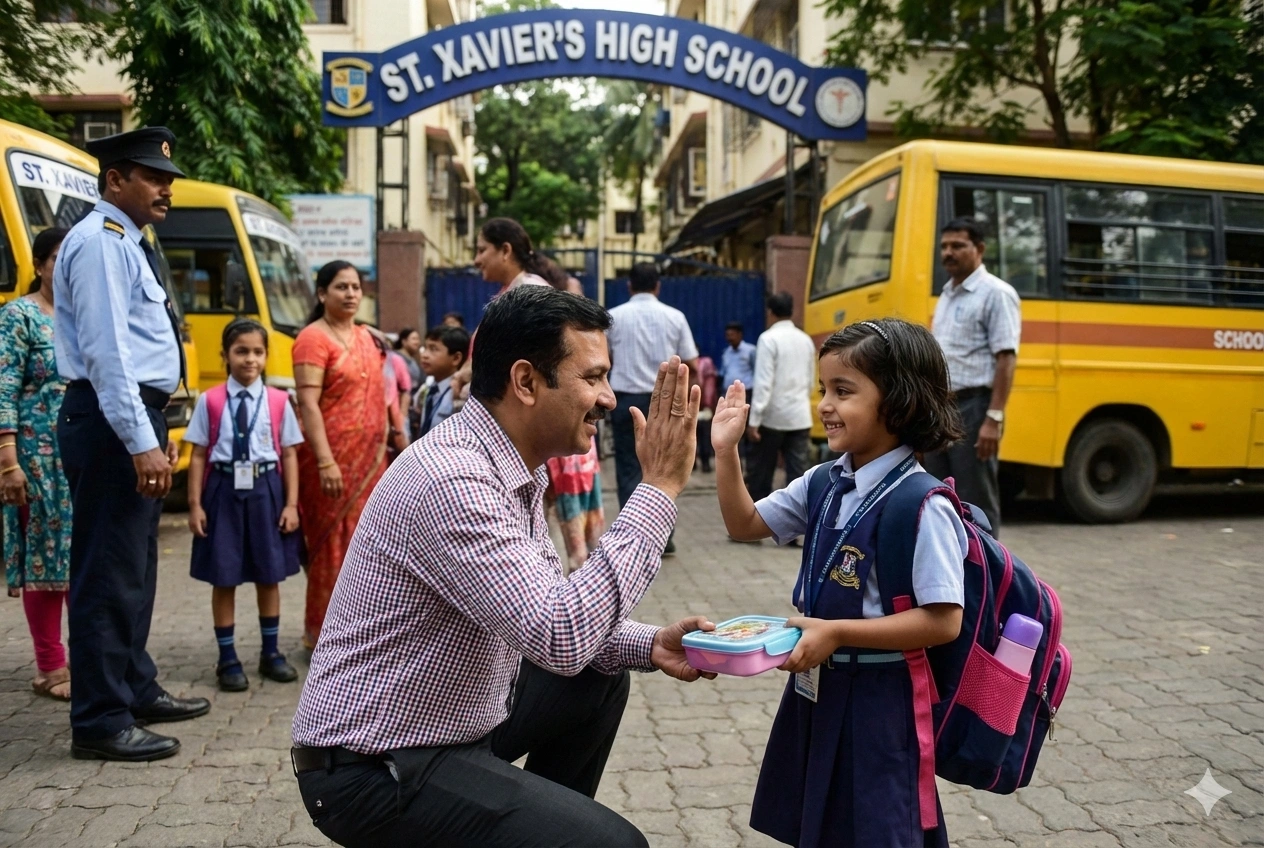
Brief, consistent goodbye rituals help children adjust faster and feel more secure
Separation anxiety is the most visible form of school-entry stress. Teachers can collaborate with families to make goodbyes less painful and more predictable.
Encourage Clear Goodbyes — Never "Sneaking Out"
Sneaking out increases distrust and worsens anxiety over time. Children need to know they are being left intentionally — not abandoned unexpectedly.
Suggest a Short, Consistent Goodbye Ritual
One hug, a wave at the window, or a special phrase like "See you after snack time" gives children a predictable farewell they can hold onto.
Redirect Immediately After Separation
Guide the child into a familiar, engaging activity the moment caregivers leave. Idleness during the transition prolongs distress.
Children are highly attuned to adult emotional cues. A calm, confident teacher communicates safety without saying a word. If the teacher appears worried or uncertain, the child mirrors that anxiety instantly.
Design a Calm, Sensory-Friendly Classroom
The physical classroom environment directly influences anxiety levels. Overly chaotic, noisy, or visually overwhelming spaces heighten stress — especially for sensitive or neurodivergent children.
Classroom Design Tips for Reducing Anxiety
- Define clear learning areas — separate, labelled spaces for reading, play, art, and group work
- Minimise visual clutter — avoid covering every wall with loud decorations
- Create a quiet corner with soft seating, cushions, or a small tent where children can regroup
- Offer sensory tools — stress balls, fidget toys, or weighted lap pads as standard classroom options, available to all
Normalising emotional regulation tools removes stigma and empowers every child to self-regulate — not just those visibly distressed. When tools are available to all, no child feels singled out for needing them.
Teach Emotional Literacy Every Day
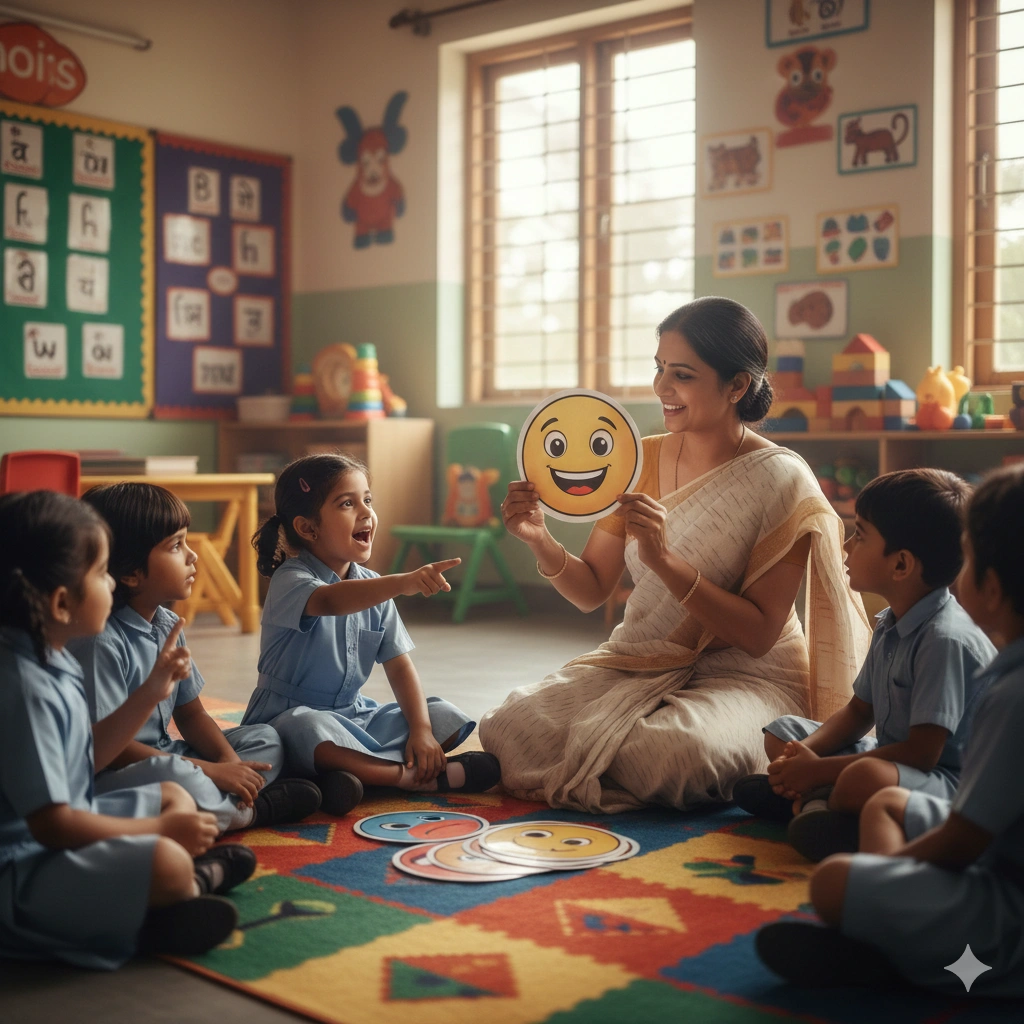
Daily emotional literacy activities give children the language to name, understand, and manage their feelings
Anxiety shrinks when children have language to understand and express what they are feeling. Emotional literacy — the ability to identify, understand, and regulate emotions — is now recognised as a foundational skill that should be embedded across all classroom activities, not treated as an add-on. Research published in Frontiers in Education (2025) argues that emotional literacy should be treated as core curriculum for building resilience in post-pandemic classrooms.
How to Build Emotional Vocabulary in Young Learners
- Model naming feelings aloud — "I feel excited about our new art project" or "I'm feeling a bit frustrated, so I'm going to take a deep breath"
- Read age-appropriate books about starting school and discuss what characters are feeling
- Teach simple regulation techniques — deep breathing, counting to five, squeezing hands
- Help children connect emotions to body sensations — "Does your tummy feel tight?" or "Are your hands feeling shaky?"
Encourage Peer Connections and Social Belonging
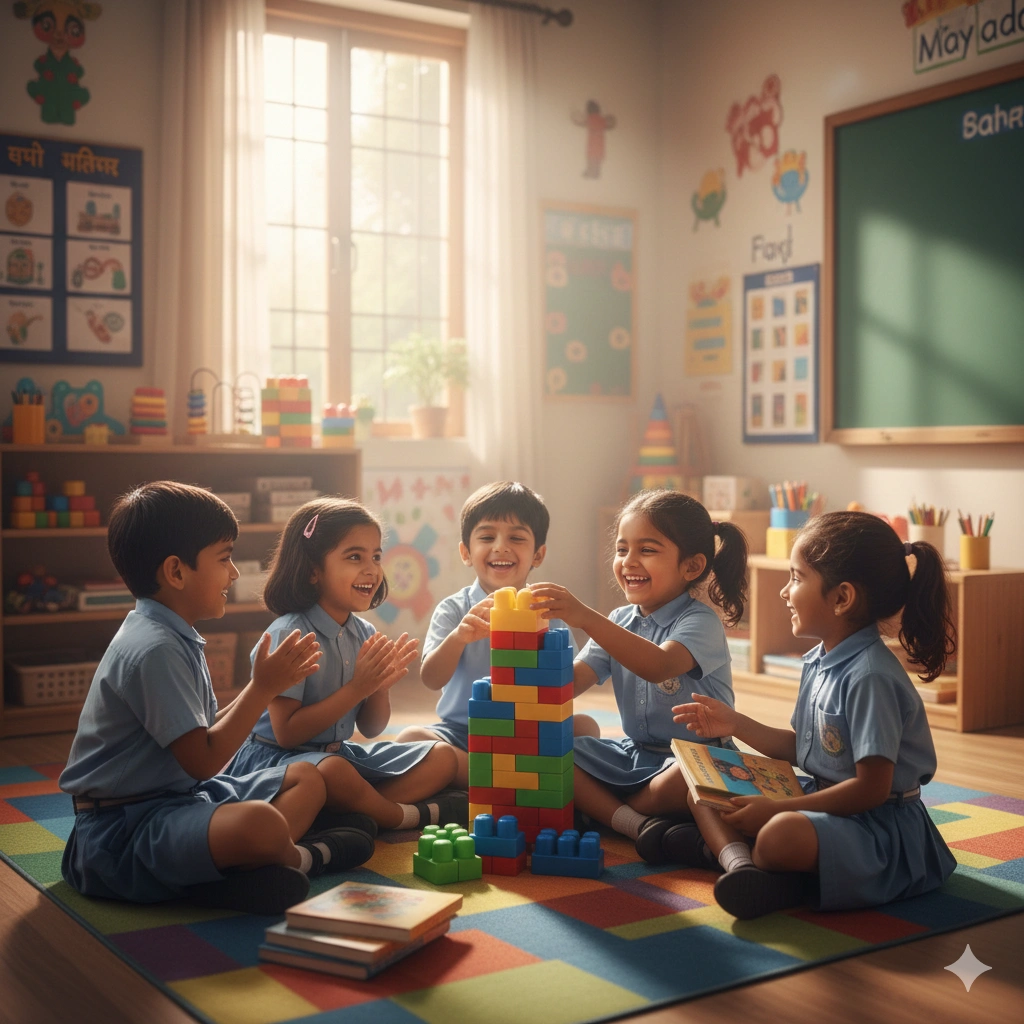
Social belonging is one of the most powerful protective factors against school anxiety
Social belonging is a powerful protective factor against anxiety. Children who feel accepted by peers are less reliant on the teacher for constant comfort and more engaged in classroom activities.
Strategies to Foster Friendships
- Pair children each morning — assign a buddy or let them choose a partner for the day
- Use small group activities that require cooperation
- Highlight shared interests — "Rohan and Meera both love dinosaurs!" breaks the ice naturally
- Incorporate partner-based play into daily routines — even brief positive peer interactions dramatically reduce isolation
Communicate Proactively With Families
A strong teacher–parent partnership makes the transition smoother for everyone. Caregiver anxiety transfers directly to children — when parents feel informed and reassured, their children feel calmer too.
How Teachers Can Partner With Parents
- Gather information early about the child's temperament, triggers, comfort objects, and home routines
- Send regular updates during the first 2–3 weeks — daily photos or short messages work well
- Share positive observations first — "Ananya joined circle time today and sang along!"
- Offer practical guidance on maintaining consistent morning routines at home
Validate Feelings Without Reinforcing Avoidance
One of the most important distinctions in supporting anxious children is the difference between validation and reinforcing avoidance. Dismissing feelings shuts down communication. But allowing a child to skip every uncomfortable situation reinforces the idea that anxiety is too big to handle.
"You're fine. There's nothing to worry about. Everyone else is okay, why aren't you?"
"It's okay to feel nervous. New things can feel really big. I'm right here to help you."
After validating the feeling, gently redirect toward participation. Praise effort and bravery — not just outcomes:
- "You hung up your backpack all by yourself today — that's amazing!"
- "You stayed with the group during story time — that was really brave."
This builds resilience over dependency — teaching children that they can feel scared and still do hard things.
Use Gradual Exposure to Build Confidence
For highly anxious children, gradual exposure to school routines prevents overwhelm. This might include shortened initial school days, allowing a comfort object from home, or slowly increasing the time spent in group activities.
Reinforcing Small Wins
- "You waved goodbye to Mummy at the door today — that's amazing!"
- "You tried the new art activity even though you weren't sure about it."
- "You sat through all of circle time — I noticed that!"
Highlighting effort over perfection builds competence and self-belief — two of the strongest antidotes to childhood anxiety. Children learn that trying matters more than getting it right.
Know When to Seek Additional Support
Most school-entry anxiety resolves within 2–4 weeks as children adjust to routines and relationships. However, persistent or escalating symptoms may signal the need for professional support.
Warning Signs That Require Attention
- Intense distress lasting beyond 4–6 weeks with no improvement
- Physical symptoms (vomiting, headaches, stomach pain) that interfere with attendance
- Extreme withdrawal or complete refusal to speak or interact
- Panic-like behaviours at drop-off or during school activities
- Regression in previously acquired skills (toilet training, speech, etc.)
In India, nearly 1 in 5 children now experiences some form of anxiety disorder. Early intervention — involving school counsellors, child psychologists, or paediatricians — prevents anxiety from becoming entrenched. Teachers should document observations and collaborate with parents and mental health professionals when concerns persist.
The Teacher as Emotional Anchor
"Children borrow regulation from calm adults. A teacher who models patience, empathy, and steadiness provides a secure base from which children can explore, learn, and grow."
— Evidence-Based Early Childhood Development ResearchSupporting anxious first-time schoolgoers is not about eliminating all discomfort — some discomfort is a natural part of growth. The goal is to ensure that children feel safe enough to face new challenges. With consistent routines, nurturing relationships, intentional emotional instruction, and strong family partnerships, teachers can transform first-day fear into lasting confidence.
The first days of school leave impressions that last a lifetime. When educators approach this transition with knowledge and compassion, they lay the groundwork not just for academic success — but for a child's lifelong ability to navigate change.
Quick Checklist: 8 Teacher Actions That Work
- ✅ Create and display a consistent daily visual schedule
- ✅ Greet every child individually and warmly at the door
- ✅ Collaborate with parents on brief, predictable goodbye rituals
- ✅ Set up a calm corner with sensory tools for all children
- ✅ Model emotional vocabulary during everyday classroom activities
- ✅ Facilitate peer connections through buddies and partner activities
- ✅ Validate feelings while gently redirecting toward participation
- ✅ Celebrate small wins — effort, bravery, and incremental progress