The reality is that the question is no longer whether children should use screens. The real question is: How can parents help children use screens in a healthy, balanced, and meaningful way?
For Indian families, this challenge is even more complex. Children juggle school, tuition classes, extracurricular activities, competitive exams, and digital learning. Add grandparents sharing reels, working parents relying on screens for convenience, and peer pressure from classmates with the latest gadgets, and screen-time management can feel overwhelming.
Why Screen Time Rules Matter More in 2026
Children today are not merely watching cartoons. They are interacting with AI tutors, playing immersive games, using virtual learning tools, creating digital content, and engaging on social media platforms from a young age.
At the same time, technology offers incredible opportunities for learning, creativity, and skill development. Therefore, the goal for parents in 2026 is not “less screen time” but better screen time. Excessive screen use has been linked to several systemic challenges:
Sleep Disturbances & FatigueLate-night scrolling disrupts sleep cycles and physical growth milestones.
Attention & Concentration IssuesFast-paced algorithm feeds reduce attention spans and academic focus.
Emotional Dependency & AnxietyDevice dependency triggers frequent mood swings, anxiety, and social withdrawal.
Rule 1: Stop Counting Hours; Start Evaluating Quality
Many Indian parents ask: “How many hours should my child spend on screens?” While time limits remain important, experts increasingly emphasize the quality of screen use over the number of hours.
Consider the vast difference between watching random videos for three hours versus active, meaningful alternatives. Not all screen time is equal. High-quality digital engagement includes:
- Attending an online coding or language class.
- Creating digital artwork or editing videos.
- Researching an interactive school project.
- Video calling grandparents and extended family members.
- Learning music through an educational platform.
Ask yourself three simple questions: Is my child learning? Is my child creating? Is my child connecting meaningfully? If the answer is yes, the screen experience is likely more beneficial.
Rule 2: Create a Family Digital Agreement
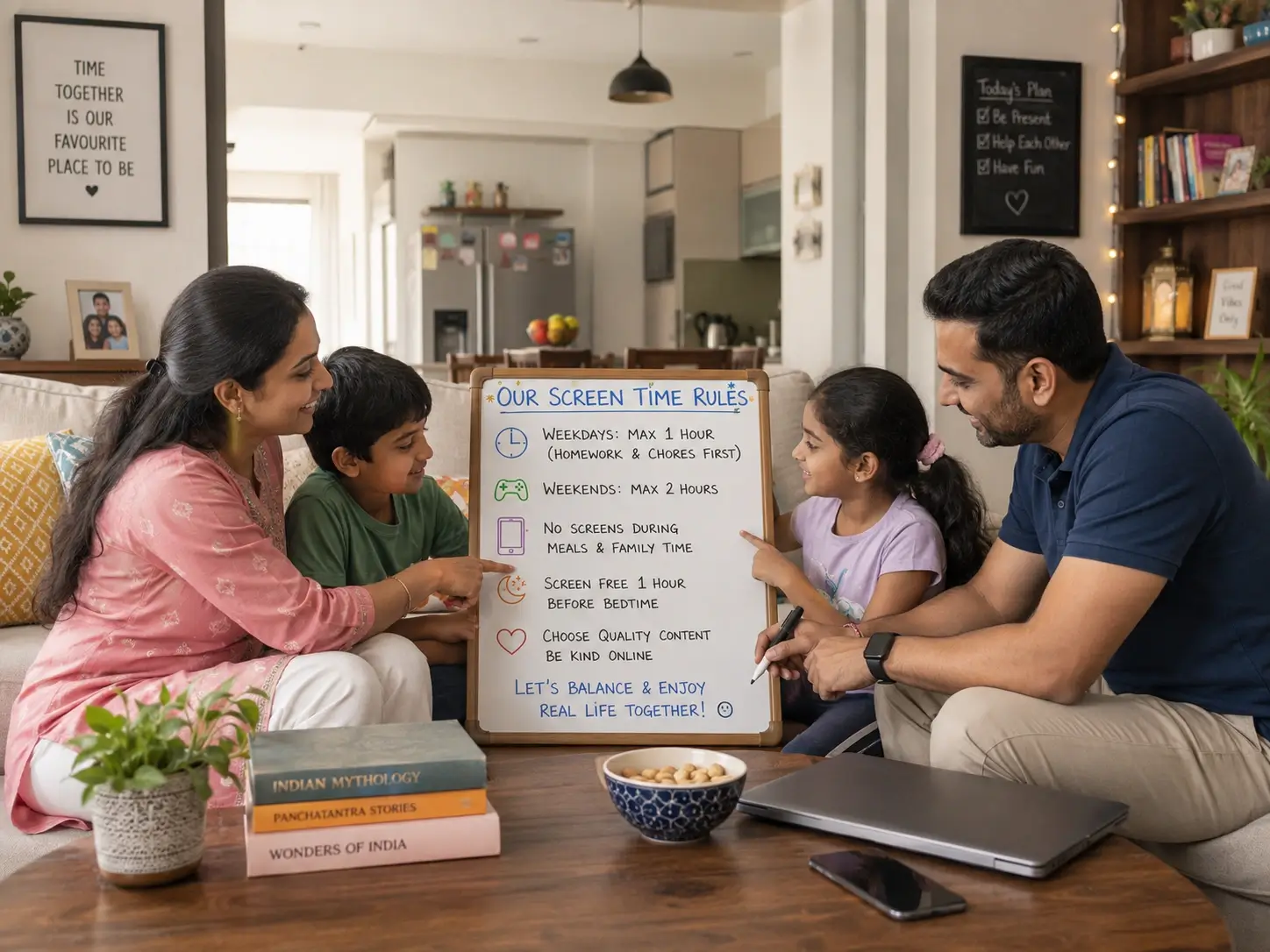
Instead of imposing rules unilaterally, involve your children in creating them. Sit together as a family and decide: how much recreational screen time is allowed, which apps are permitted, when/where devices should be switched off, and what happens if rules are broken. Children are far more likely to follow rules they helped create.
For example, a practical Indian family agreement may include:
No Phones During Meals
Keep dining times reserved for family conversations.
Bedtime Boundaries
No screens allowed one hour before sleeping.
Priorities First
Homework and chores must be finished before gaming.
Print these mutually agreed rules and place them somewhere highly visible in the house, like on the refrigerator door.
Rule 3: Keep Bedrooms Screen-Free
One of the biggest mistakes many families make is allowing children to sleep with phones, tablets, or smart devices nearby. Children often continue scrolling long after parents believe they are fast asleep.
Poor sleep directly affects memory, academic performance, mood, physical growth, and overall mental health. Create a central family charging station outside the bedrooms. Crucially, this rule should apply to parents as well—children notice when adults say one thing but do another.
Rule 4: Follow the 20-20-20 Rule
Indian children today spend hours attending online classes, completing digital assignments, and engaging in recreational screen activities. To reduce eye strain, establish the 20-20-20 habit. Every 20 minutes, ask your children to look at something 20 feet away for at least 20 seconds.
This simple habit significantly helps reduce digital eye strain, chronic headaches, and physical fatigue. Encourage your children to blink frequently and maintain a proper ergonomic posture while using devices.
Rule 5: Prioritize Offline Activities Daily
A child’s schedule should not revolve entirely around high-dopamine screens. Every single day, children must have built-in opportunities for outdoor play, sports, reading physical books, creative hobbies, family conversations, and free imaginative play.
In Indian households, involving children in everyday routine tasks—such as watering plants, helping out in the kitchen, arranging books, or participating in daily family rituals—can naturally reduce unnecessary device use. Remember: boredom is not dangerous. In fact, boredom often sparks genuine lifelong creativity.

Rule 6: Delay Personal Smartphones as Long as Possible
Many Indian children now receive personal smartphones before even entering secondary school. Before giving a personal smartphone, ask yourself honestly: Does my child genuinely need one? Can a shared family device work instead? Is my child mature enough to manage online risks and follow digital rules consistently?
A smartphone is not just a basic communication tool; it is open access to the entire unregulated internet. If you decide to provide one, make sure to enable comprehensive parental controls, limit app downloads, monitor screen usage regularly, and discuss online safety openly.
Rule 7: Teach Digital Citizenship, Not Digital Fear
Many parents focus exclusively on the dangers: cyberbullying, online predators, gaming addiction, and inappropriate content. While these risks are entirely real, children need education about responsible digital behavior over blind fear.
Teach them to never share personal information online, verify information before believing or forwarding it (especially on family groups), respect others in comment sections, and understand that social media often presents unrealistic versions of reality. Children who understand digital responsibility are better equipped than children who simply fear punishment.
Rule 8: Become the Role Model
This may be the hardest rule of all. Children observe their parents constantly. If parents scroll through reels during meals, use phones while talking to family, check notifications continuously, or spend their entire evenings on social media, then children learn that constant screen use is completely normal.
Ask yourself honestly: Do I put my phone away during active family times? Do I prioritize face-to-face conversations? Do I take regular digital breaks? Healthy screen habits in children begin with healthy adult habits.
Rule 9: Watch for Warning Signs
Sometimes device use shifts from a recreational hobby into an unhealthy compulsion. Parents should look out for persistence in warning signs rather than dismissing them as a temporary phase. Watch closely for:
- Extreme irritability or emotional outbursts when devices are removed.
- Declining academic performance or incomplete homework assignments.
- Loss of interest in long-standing offline activities and physical play.
- Chronic sleep problems, late-night waking, or daytime fatigue.
- Social withdrawal from family gatherings and face-to-face peer interaction.
- Secretive online behavior or hiding screens when an adult walks into the room.
Rule 10: Focus on Connection, Not Control
Perhaps the most important lesson for Indian parents in 2026 is this: Children do not need technology police officers. They need guides. Strict control without conversation often leads to secrecy. Open, empathetic communication builds long-term trust.
Instead of strictly demanding, “How much time did you spend on your phone?” try pivoting your approach to open questions:
“What did you enjoy online today?”Encourages children to share their digital world without fear of judgment.
“What did you learn or find interesting?”Shifts the focus towards constructive learning and analysis.
“Did anything online make you uncomfortable?”Creates a safe harbor for them to flag cyberbullying or disturbing content.
Connection Creates Trust
Technology is not the enemy of modern childhood; unhealthy habits are. In 2026, successful parenting is not about completely eliminating screens. It is about helping children develop self-control, critical thinking, and lifestyle balance. A child who learns to use technology wisely today will become an adult who can thrive in tomorrow’s digital world.