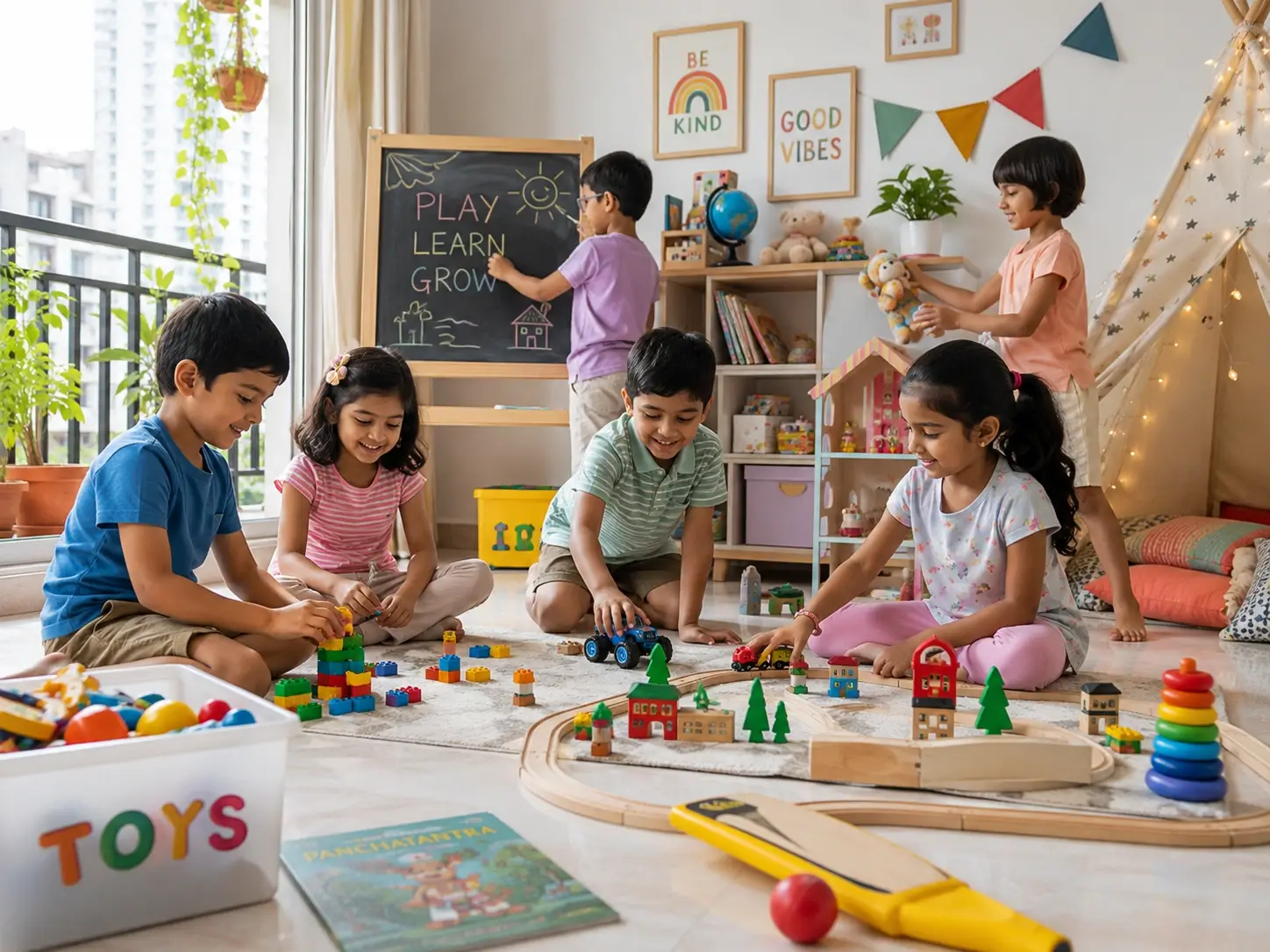
Children are naturally curious, imaginative, and creative. They don't see toys through stereotypes unless adults teach them to. A boy playing with a toy kitchen isn't becoming less masculine, and a girl with racing cars isn't becoming less feminine. They're simply children exploring through play.
In modern India, where conversations about equality and balanced parenting are growing, it's time to move beyond outdated beliefs and let children choose toys based on interest, not gender expectations.
Toys Shape Learning and Development
Toys aren't just entertainment. They play a major role in emotional, social, intellectual, and physical development. Through play, children learn:
Creativity and ImaginationFostered through art and pretend play.
Communication and EmpathyDeveloped by playing with dolls and engaging in role-play.
Problem-Solving and LogicLearned through puzzles and building blocks.
Teamwork and Physical SkillsBuilt through sports and outdoor games.
When toys are divided by gender stereotypes, children miss opportunities to develop these essential life skills. Dolls and pretend-play sets teach nurturing and emotional understanding, while building blocks develop spatial skills. These skills matter for every child, regardless of gender.
Why Gender Stereotyping in Toys Is Harmful
It Limits Children's Freedom: Children should explore interests naturally. When adults say "Boys don't play with dolls" or "Girls shouldn't play with trucks," children feel judged for their choices. Over time, they may avoid activities they genuinely enjoy just to avoid criticism. Gender-neutral toy choices allow natural curiosity to flourish.
It Reinforces Outdated Gender Roles: Toy stereotypes teach fixed social roles—that girls should cook and care for others, while boys should build or be "tough." These ideas don't match modern reality. Today, women are scientists and engineers, and men are chefs and caregivers. Children need to understand that abilities and interests aren't determined by gender.
It Affects Confidence and Self-Expression: Repeated discouragement from certain toys can make children feel something is "wrong" with their preferences. A boy who loves art shouldn't feel ashamed, and a girl interested in robotics should feel encouraged.

Play Should Be About Imagination, Not Labels
Children use toys to create imaginary worlds: a cardboard box becomes a spaceship, a blanket becomes a castle, and a doll becomes a best friend. Their creativity has no gender boundaries. When children play freely, boys learn empathy through nurturing play, and girls develop leadership through construction and action toys. Adults often complicate what children naturally understand—play is universal.
The Indian Context: Breaking Gender Stereotypes
Indian society traditionally carried strong gender expectations, pushing girls toward domestic roles and expecting boys to appear tough. But parenting in India is changing. Many families now recognize the importance of raising emotionally intelligent, independent children rather than gender-conditioned ones.
Schools and educators increasingly promote gender-neutral learning environments. However, stereotypes persist in toy store marketing, advertisements, and family comments. Breaking these patterns requires awareness at home and in society.
Parents and Teachers Play Crucial Roles
Adults shape children's understanding of acceptable play. Parents and teachers must be mindful of messages given.
Instead of saying: "This is for girls," or "Boys don't do that," adults should try saying: "Choose what you enjoy," and "Every toy teaches something." Simple language changes create healthier, more confident children.
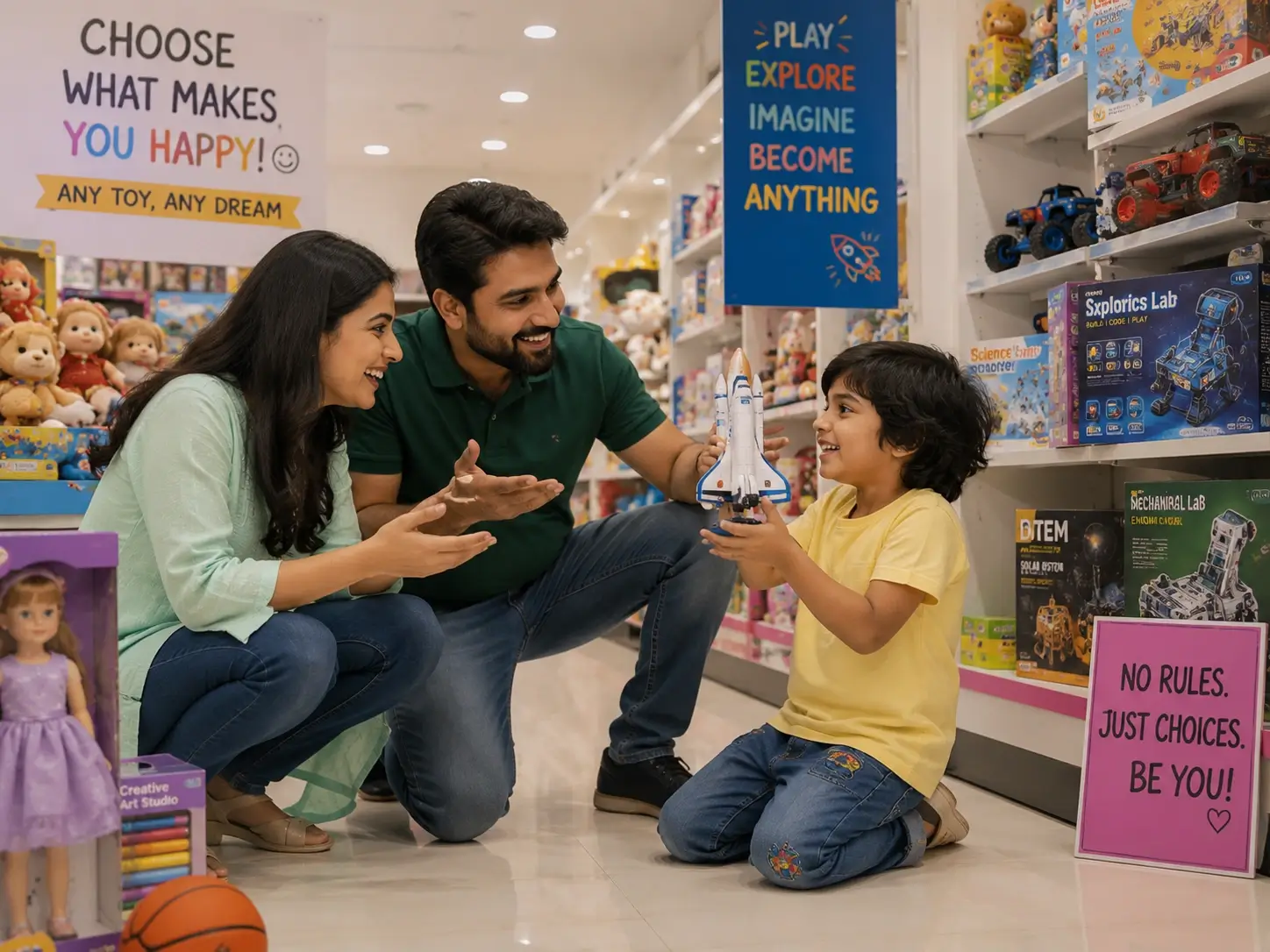
Encouraging Balanced Development for All Children
A balanced childhood needs variety in play experiences. No gender should be limited to specific development areas:
Creativity
Art materials, crafts, drawing, and painting sets.
Emotional Growth
Dolls, soft toys, pretend play, and role-playing sets.
Logic & Problem-Solving
Puzzles, building blocks, and science kits.
Physical Activity
Sports equipment, bicycles, and outdoor games.
Communication
Board games, storytelling toys, and card games.
Imagination
Open-ended toys, costumes, and play dough.
Society Must Stop Judging Children's Choices
Children hesitate to choose certain toys due to fear of judgment from relatives laughing at "unusual" choices, friends teasing different interests, or social expectations about "proper" play. But children should never feel ashamed of harmless interests.
A toy doesn't define a child's future career, personality, identity, or abilities. Toys simply reflect curiosity and imagination at that stage. The goal of parenting is to help children become happy, capable, emotionally secure individuals—not fit rigid social boxes.
Let Children Play Freely
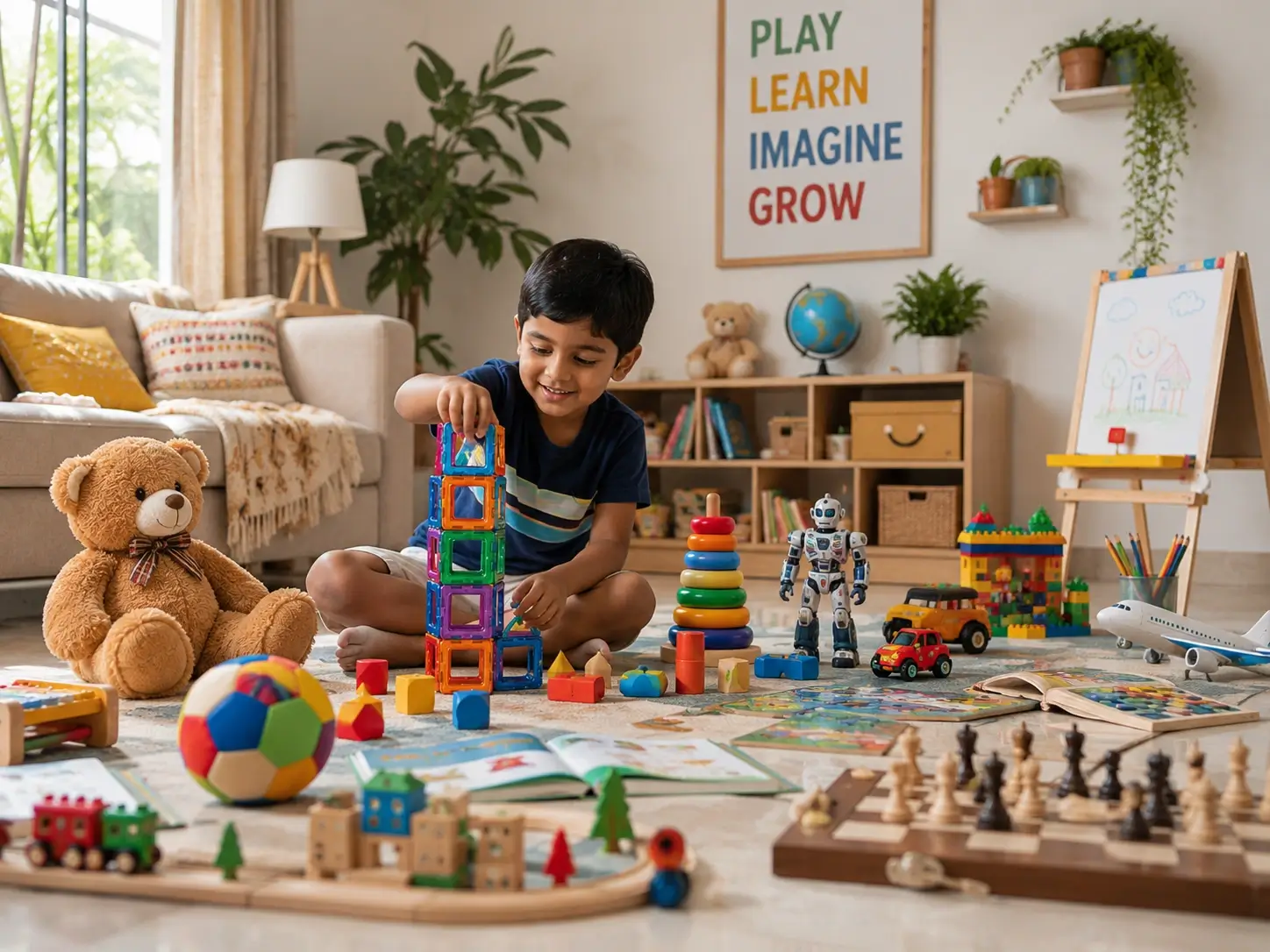
Children are born with curiosity, not stereotypes. Society gradually teaches them what's supposedly "acceptable" for boys or girls. Dividing toys by gender limits creativity, reinforces outdated roles, and prevents full potential exploration.
Every child deserves freedom to play, imagine, and learn without judgment. A doll can teach compassion to a boy. A construction set can inspire innovation in a girl. Both experiences are equally valuable. In today's changing world, raising open-minded, confident children matters more than protecting old stereotypes.