Abilities Beyond Barriers: Redefining Success for Divyang Children
Every day, millions of children live in a world that often sees their disability before it sees their potential. But what if we shifted this perspective? What if schools, teachers, parents, and society recognized that disability isn't a limitation—it's simply a different way of learning and contributing?
The Reality: Understanding Divyangjan Children and Inclusive Education
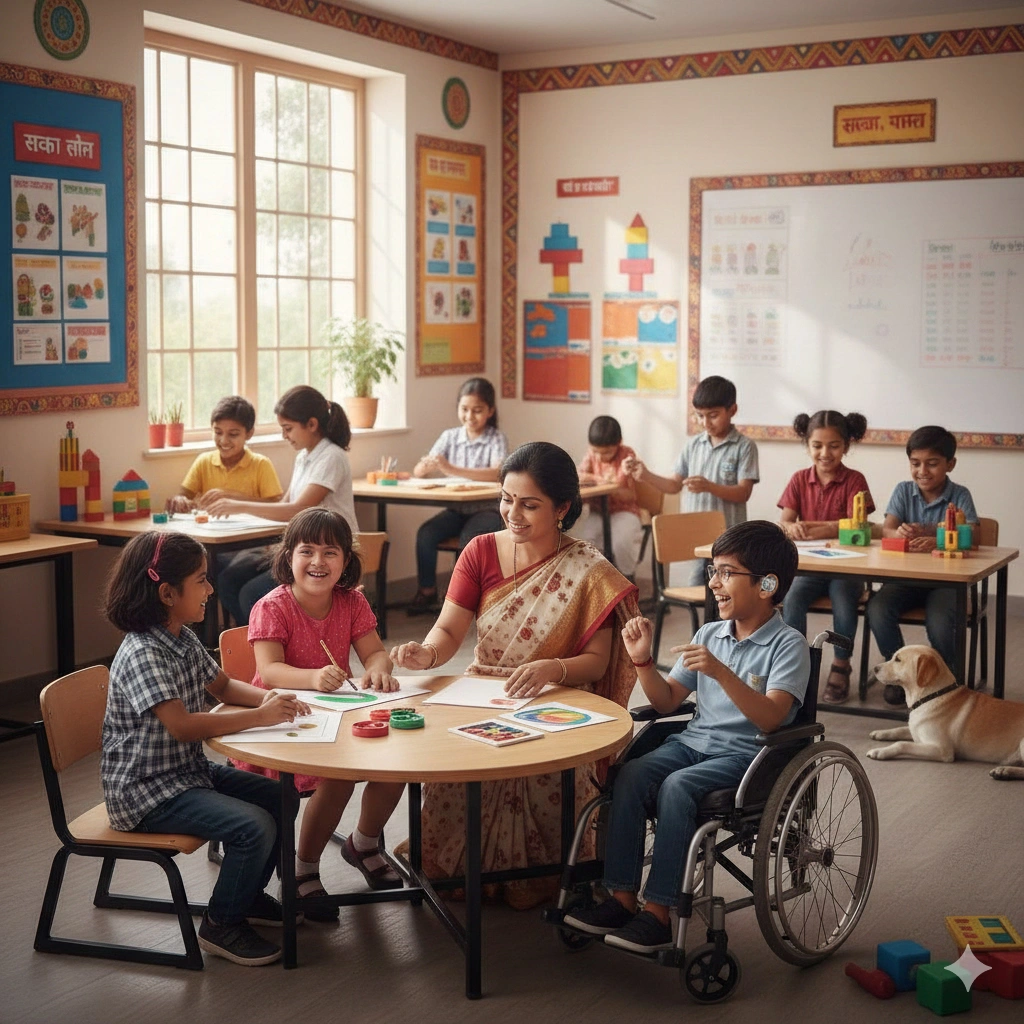
The term Divyangjan means "divine abilities," reflecting a fundamental truth: every child has unique potential. Globally, approximately 240 million children experience disability, according to UNICEF. In India alone, 2.1 million children with special needs (CWSN) are enrolled in schools, though only 61% of children aged 5-19 with disabilities actually attend educational institutions.
The barriers these children face aren't inherent to disability itself. Rather, they stem from inadequate infrastructure, teacher training gaps, and societal misconceptions. Only 12% of Indian schools are equipped with appropriate resources for inclusive education. This explains why enrollment peaks at the primary level (943,512 students) but drops sharply at higher secondary (149,022 students)—retention remains a critical challenge.
Gender Disparities: Girls represent only 42.91% of CWSN enrollment, reflecting cultural biases and limited accessible facilities in rural areas. Only 41.7% of girls with disabilities complete primary school, compared to 50.6% of boys.
Legal Frameworks Driving Change: From RTE to NEP 2020

India has constructed a robust legal foundation for inclusive education and children's right to education. The Right of Children to Free and Compulsory Education (RTE) Act, 2009 guarantees up to 3% reservation for children with disabilities in school admissions, ensuring education without discrimination. This landmark legislation emphasizes dignity, equity, and stress-free learning environments.
Key Legal Milestones
- RTE Act 2009: 3% reservation for children with disabilities, free and compulsory education
- RPwD Act 2016: Barrier-free access, reasonable accommodations, individualized support
- NEP 2020: Universal access, early identification, assistive technologies, flexible curriculum
Building on this foundation, the Rights of Persons with Disabilities (RPwD) Act, 2016 mandates barrier-free access, reasonable accommodations, and individualized support systems. It reinforces a crucial principle: disability is not incapacity—it is diversity.
NEP 2020: A Watershed Moment
The National Education Policy 2020 represents a watershed moment for special needs education in India. It explicitly recognizes Divyang learners as a priority, emphasizing:
- Universal access to quality education for all children, regardless of ability
- Early identification and intervention through digital screening tools
- Individualized learning plans with flexible curriculum adaptation
- Assistive technologies for barrier-free learning
- Teacher training in inclusive pedagogy and sensitivity
PRASHAST App: The government launched this digital tool enabling teachers to screen for potential disabilities early, enabling timely intervention rather than exclusion.
Breaking the Narrative: Disability Does Not Define Destiny
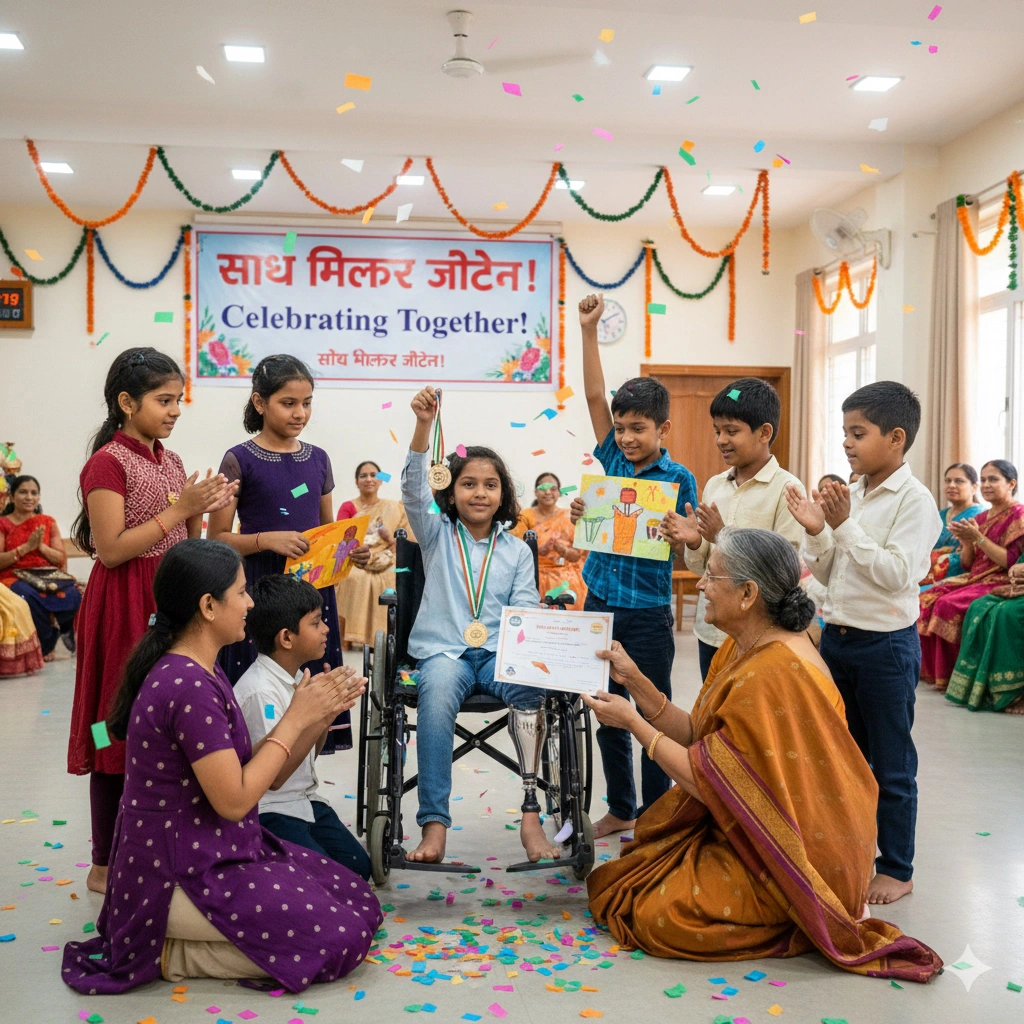
History provides powerful evidence: abilities beyond barriers are not exceptions—they are the rule.
Inspiring Examples
- Dr. Stephen Hawking: One of history's greatest theoretical physicists, lived with ALS but made groundbreaking contributions to science
- Hrithik Roshan: Overcame severe speech disorder through perseverance to become a Bollywood superstar
- Rana Daggubati: Despite vision impairment and blindness in one eye, built a celebrated acting career
These are not stories of success despite disability. They are stories of success alongside disability—enabled by opportunities, belief, and support systems.
The question is not whether children with disabilities can succeed. The question is: Will we create environments where they can?
Building Inclusive Ecosystems: The Role of Schools, Parents, and Society
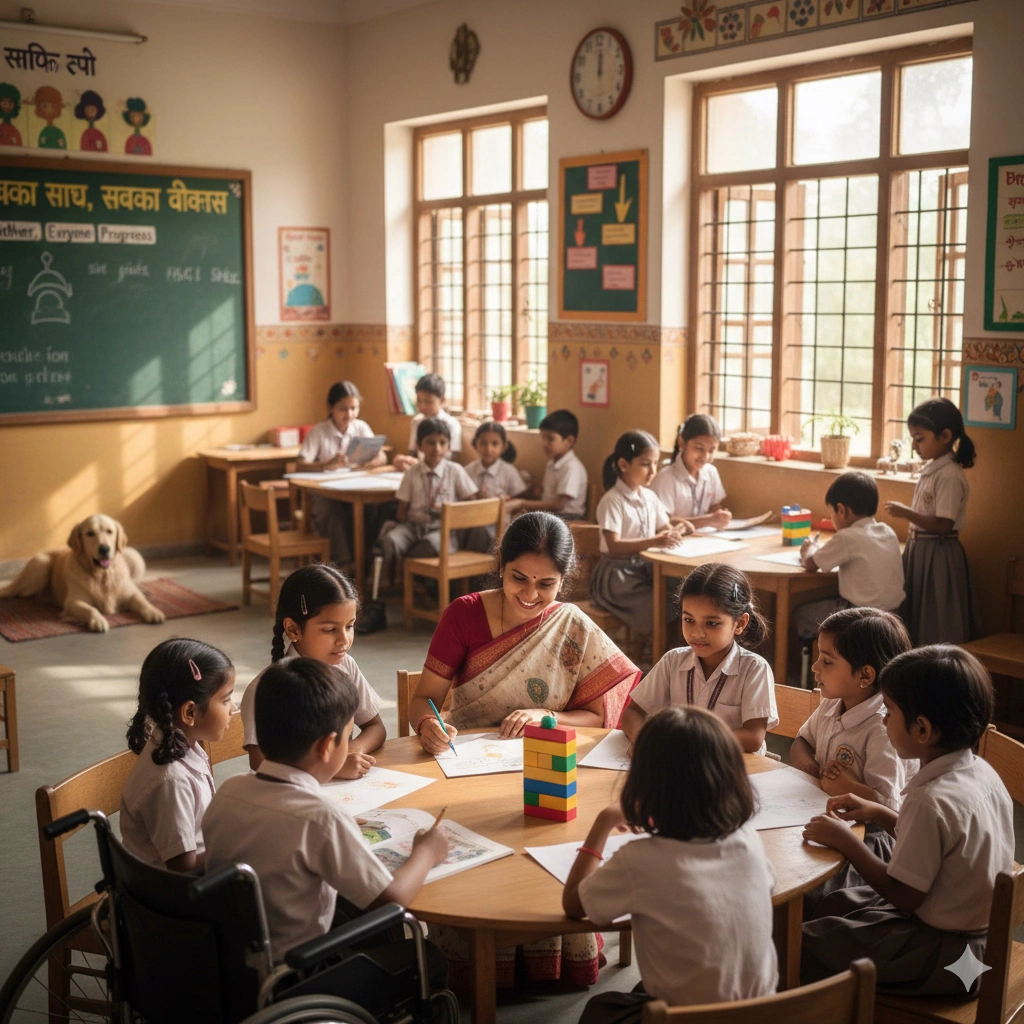
True inclusion transcends laws and policies. It requires a fundamental mindset shift—from pity and overprotection to respect, acceptance, and genuine inclusion.
Schools: Beyond Compliance
Schools must move beyond compliance to create emotionally safe, barrier-free environments. Teachers should focus on individual abilities, not diagnostic labels. Peer sensitization is equally vital—children growing up learning empathy and cooperation rather than prejudice become advocates for inclusion.
Parents: Architects of Inclusive Values
Teaching children kindness, respect for diversity, and understanding that inclusion is a right, not charity builds foundations for societal change. Parents of children with disabilities themselves become powerful change agents, advocating for systemic improvements.
Society: Embracing Diversity
Society must embrace the understanding that Divyang children are not "less capable"—they are differently-abled, with unique ways of learning, expressing, and contributing. This shift from deficit-based thinking to strength-based recognition is transformative.
Key Insight: The real obstacle to success isn't disability—it's exclusion, ignorance, and lack of opportunity.
The Path Forward: Redefining Success Through Inclusion
Recent data from UDISE+ 2024-25 shows enrollment growth, yet current enrollment still falls short of NEP 2020's 2.5-3% target. However, this gap represents opportunity, not failure. Every percentage point gain means thousands of children gaining access to quality education.
Assistive technology adoption, barrier-free school infrastructure, and specialized teacher training are accelerating. States like Kerala (5.73% CWSN enrollment) demonstrate what's possible when systems prioritize inclusion. States with lower enrollment rates show that localized, well-resourced strategies can rapidly transform access.
When Divyang children receive accessible learning environments, individualized support, inclusive peer relationships, and genuine encouragement, their potential becomes limitless.
What You Can Do
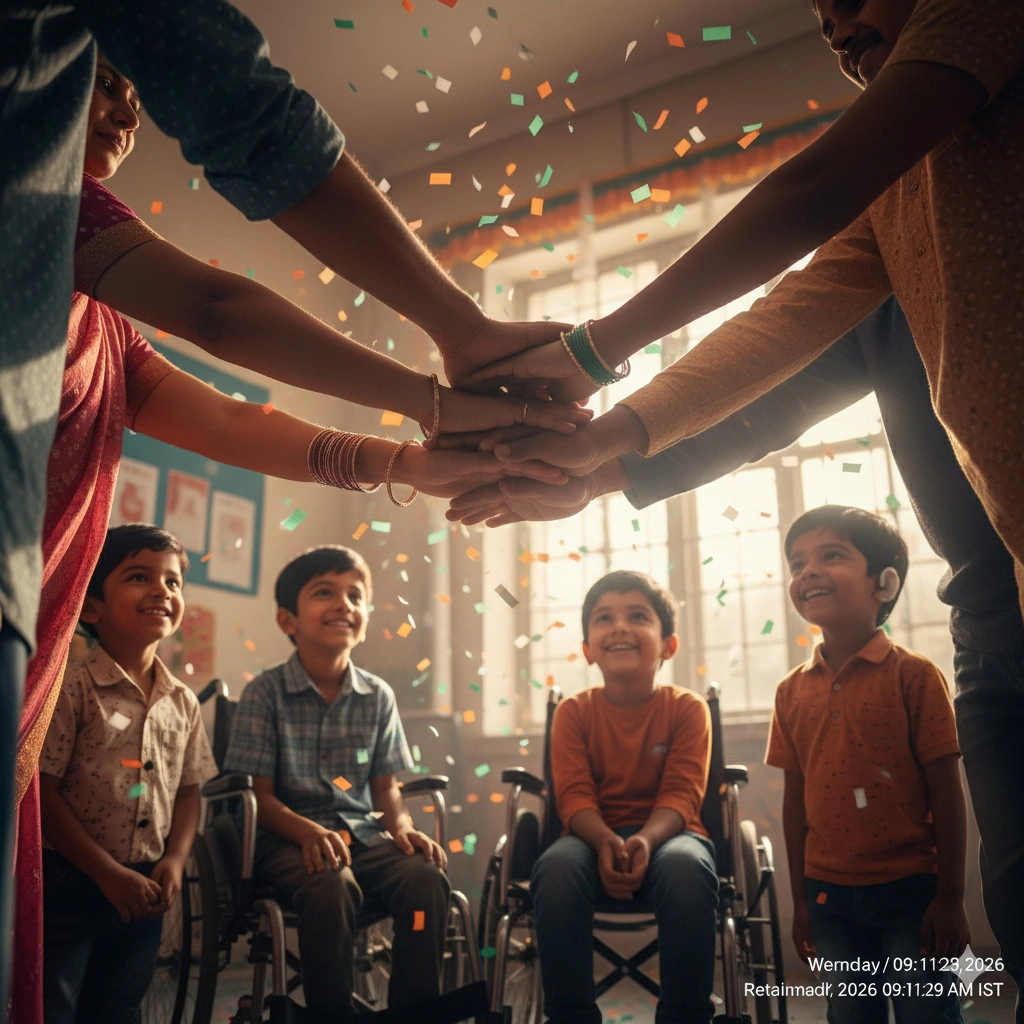
Whether you're an educator, parent, policymaker, or community member, you hold power in this transformation:
- Learn about inclusive education practices and children's rights to education
- Advocate for barrier-free school infrastructure and accessible learning resources
- Support children with special needs with empathy and belief in their potential
- Engage in peer sensitization to build inclusive school cultures
- Stay informed about evolving policies like NEP 2020 and assistive technology innovations
Remember: India's vision of inclusive education, as articulated in NEP 2020 and upheld by RTE 2009 and RPwD 2016, is achievable. It requires consistent effort, adequate resources, and unwavering commitment to the principle that every child—regardless of ability—deserves to be valued, empowered, and celebrated.
The question isn't whether Divyang children can succeed. History and contemporary achievements prove they can. The question is: When will we build a society that believes it?